
Reviewed · SAIGON CITY HIGHLIGHTS TOURS
City Sightseeing Saigon Bus Tour
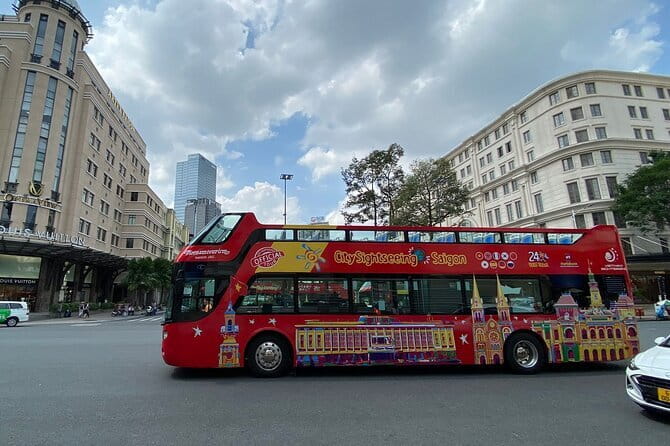
A great first day in Saigon starts on a bus. The City Sightseeing Saigon tour is a practical hop-on hop-off way to see big landmarks fast, with audio commentary and two route options. I especially like the way it serves major sights like the War Remnants Museum and Ben Thanh Market, plus the convenience of stopping and starting again on your own schedule. One thing to consider, the upstairs open deck can be exposed to changing weather, and the multilingual audio is helpful but not always gripping.
You’ll get a city “greatest hits” loop that takes roughly 75 to 80 minutes depending on the route, then you can ride again as many times as you want during the day (or use a 2-day ticket if you’re moving slowly). It’s also pretty easy to find stops once you match the route and line color, but the start can be confusing if you’re expecting everything to work exactly like a third-party ticket.
If you want to get your bearings fast, this tour does that. If you’re hoping for a dramatic, must-hear story narration, go in with realistic expectations.
Key Things I’d Put at the Top of Your List
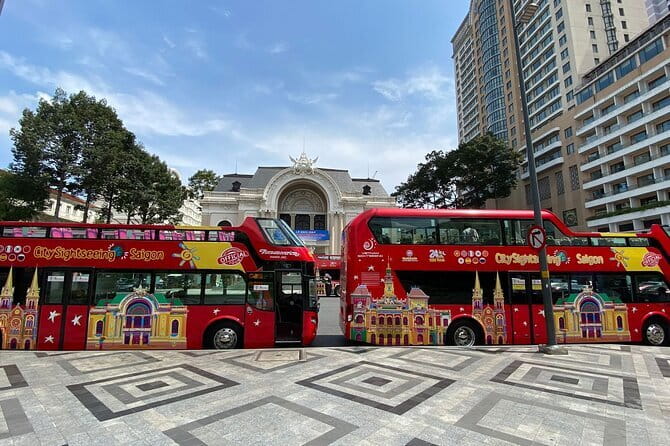
- Two routes with major sights covered: Red and Blue connect the big-photo stops, so you are not crisscrossing the city from scratch.
- Hop on and hop off anytime at designated stops: You control how long you spend at each highlight.
- Free guidebook plus Wi-Fi: You get maps, recommendations, timetables, and coupons, and there is Wi-Fi on board.
- Designed for frequent loops: Buses run every 30 minutes on Red and every 45 minutes on Blue.
- Easy boarding points tied to well-known landmarks: Saigon Opera House for Red, and Pham Ngu Lao in front of Liberty Hotel for Blue.
- Weather and audio are the trade-offs: Open-top views are great, but changing conditions and commentary quality are factors.
What This Ho Chi Minh City Bus Tour Really Delivers
This is not a deep, slow, “learn everything” kind of tour. It’s a fast, flexible way to connect the dots between Saigon’s most famous places, without needing to figure out bus routes or hire cars for every leg.
The value is simple. For a single ticket, you can ride through key areas, get views from an open-top deck, then step off near major attractions and walk or re-enter when you’re ready. Because it’s hop-on hop-off, you can match the pace to your energy level, your photos, and your interest in history versus shopping versus temples.
The other big win is practical information on board and on paper. The tour includes a free guidebook with maps, recommendations, timetables, and coupons. That matters because after one bus ride, your next step becomes easier: where to eat, what to see next, and how to plan your remaining hours.
You can also read our reviews of more city tours in Ho Chi Minh City



Red Route: Opera House, War Remnants, Ben Thanh, and the Cathedral Zone
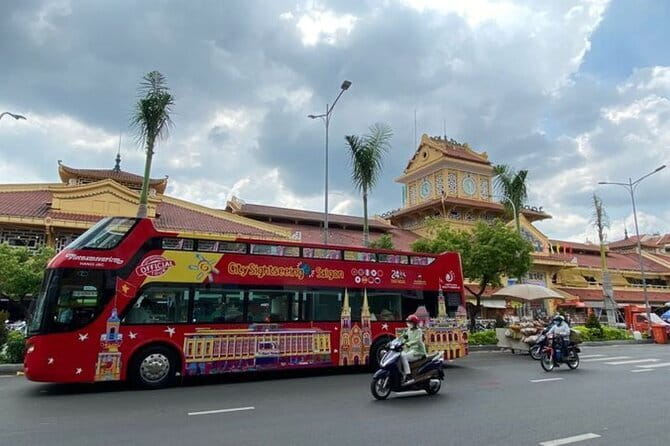
The Red Route is the one that most directly feels like a classic highlights loop. It starts at the Saigon Opera House, and buses run from 9:00 am to 4:00 pm. The full loop takes about 75 minutes, with departures every 30 minutes, so you are not stuck waiting forever if you miss a bus.
Saigon Opera House, Nguyen Hue Street, and the big-city “center view”
You begin at the Saigon Opera House, then roll into the central area around Nguyen Hue Street. Even if you do not go inside, seeing the Opera House area from the bus gives you an anchor point for the rest of your day. Nguyen Hue is where the city feels most “on display,” and the ride helps you connect the wider boulevards with the nearby sights.
Why it’s worth using this stop: It sets the tone and makes later neighborhoods easier to navigate on foot.
Potential drawback: This part can be visually impressive, but it is also where you might spend more time snapping photos than learning specifics from the audio.
Nha Rong Wharf and the riverside mood
Next up is Nha Rong Wharf, a strong cultural and visual contrast point. The riverside area tends to make the city feel less boxed in by skyscrapers. You can stay on the bus for the view or step off if you want to stretch your legs.
What to watch for: If you step off, keep your return plan in mind. With hop-on hop-off, your time adds up fast if you lose track of the next pickup window.
Tran Hung Dao Statue and the museum cluster feel
You pass by Tran Hung Dao Statue and then head toward the museum zone, including Ho Chi Minh Campaign Museum and the Museum of Vietnamese History stop area. This is the part of the route that turns the trip toward deeper historical themes, and it is a natural place to plan your one “museum hour” if that’s your style.
One practical reality: entry to attractions is not included in the ticket. You’ll pay for museum tickets separately if you want to go in. Still, the bus makes it easy to decide on the spot whether you feel ready to commit time and tickets.



War Remnants Museum stop, the “must-do” moment
If you’re deciding what to prioritize, put War Remnants Museum at the top of your list. It’s repeatedly treated as the standout stop, and it’s the kind of place that benefits from arriving with a little time cushion so you can absorb it without rushing.
How to use this stop well: Plan to get off, then ride later for photos around the central city. Since buses come frequently, you do not need to treat the museum visit like a timed train connection.
Consideration: This museum stop is emotionally heavy. If you prefer lighter content, you can still pass by, but you’ll miss the experience that most people build their day around.
Pham Ngu Lao (Beer Street) and Ben Thanh Market for food and shopping
After the museum zone, the route slides into Pham Ngu Lao Street, often linked with the lively Beer Street area. This is where the city’s energy turns toward casual dining, snacks, and street life. Then you reach Ben Thanh Market, one of the most recognizable markets in town.
Why this pairing works: Museum first, then market next. It’s a nice reset. You can do a quick browse at Ben Thanh, grab a snack, and still keep your day organized because the bus loop keeps circling back.
What to watch for: Ben Thanh is popular, so plan for crowds and take your time. If you are going to bargain, do it with patience and keep your budget in mind.
Independent Palace and the Cathedral / Central Post Office area
The last stretch of Red Route brings you to Independent Palace, then to Saigon Notre Dame Cathedral / Central Post Office. This is classic photo territory. Even if you only see these landmarks from the road and sidewalks, the bus puts you close enough to plan short walks when you want better angles.
How to get more out of it: If you’re planning a longer photo stop, give yourself time to walk between the Cathedral and the Central Post Office area. Even a short stroll changes the feel from “passing view” to “you are actually there.”
Blue Route: Pham Ngu Lao, Flower Market, and Pagoda Stops
The Blue Route is a slightly different flavor. It starts at 187 Pham Ngu Lao Street, with the bus stop in front of the Liberty Hotel. The first departure is 9:00 am, and the last departure is 3:45 pm. The loop takes about 80 minutes, and buses run every 45 minutes.
Blue Route includes several of the same central anchor points, but then stretches into additional neighborhood stops that feel more “everyday Saigon.”
Beer Street and Ben Thanh again, then into markets and temples
You’ll see stops around Beer Street on Pham Ngu Lao, then back to Ben Thanh Market, and you’ll also pass War Remnants Museum area again depending on how you ride. This overlap is useful because it lets you build a route that fits your timing. If you miss one opportunity, you might still reach it from the other line.
Then the Blue Route adds stops like:
- Ho Thi Ky Flower Market (flowers, color, and quick browsing)
- Binh Tay Market (another major market stop)
- Thien Hau Pagoda and other pagoda stops including Ong Bon Pagoda and Van Phat Pagoda
The names alone tell you what kind of vibe each stop is for. Markets lean toward shopping and snacks. Pagodas lean toward quiet observation and respectful visiting.
Adding Phuoc An society’s premises and small street stops
There is also a stop labeled Phuoc An society’s premises, plus smaller named points along the way. These are helpful because they give you specific “get off here” targets, even if you are not trying to do a full walking tour from scratch.
Practical angle: Blue Route is a good choice if you want a bit more variety, especially if shopping and temple visits matter to your itinerary.
Switching Lines Without Stressing Your Schedule

This tour is easiest when you think of it as two overlapping loops. You can start on one line, ride partway, then switch to the other around the middle of the day.
The guidance is to switch lines at Stops 6, 7, and 8 on the Red Route, which correspond to Stops 1, 2, and 3 on the Blue Route. In plain terms, that means the transition happens around the area of Pham Ngu Lao, Ben Thanh Market, and the War Remnants Museum zone.
How I recommend you plan it
- If you want the museum as your centerpiece, build your route around arriving in that zone, then switching lines if it makes the next stop easier.
- If you want more market and pagoda time, ride Blue Route after you reach the central area overlap.
A simple strategy: decide which one is your “anchor” stop, museum or markets. Then use the bus frequency to fill gaps.
Open-Top Deck Views, Audio Guide Reality, and Comfort Choices
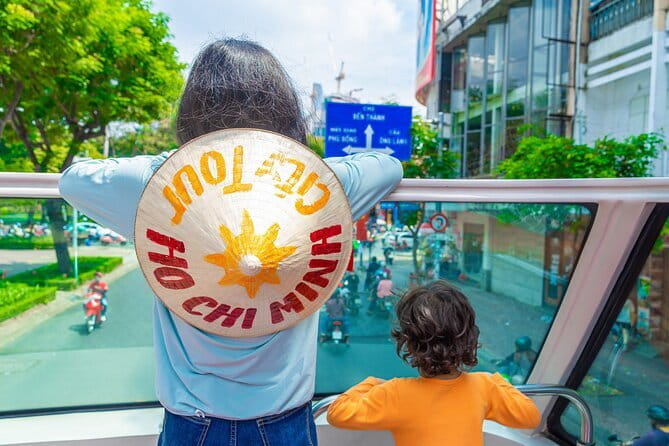
One of the most appealing things about City Sightseeing-style buses is the viewpoint. You’re up high, you can see boulevards, and you get that street-level city blur that helps you place things on a map.
But comfort is a trade-off. When you choose the open-top deck, you are exposed to changing weather. That matters in Ho Chi Minh City, where conditions can shift over the course of a short day. The good news is there is an air-conditioned option inside. If you feel warm, tired, or just want a break from sun or rain, switching to the interior can make the ride more enjoyable.
The audio guide: useful, not always captivating
The audio guide provides commentary in several languages, which is a genuine plus if you want context while you’re moving. Still, you might find the commentary a bit boring. That does not mean it is useless, it just means I would not rely on it to carry your interest.
Instead, use audio as a support tool. Look at the landmarks first, then use the narration to connect what you’re seeing to a bigger story.
Finding the Right Stop: A Fast Fix for the Usual Confusion

This tour’s biggest make-or-break moment is figuring out where to start. The buses are part of a local system, and your ticket is part of an international booking flow, so the first step can feel confusing.
Here are the two most important “start here” points:
Red Route starting point and exchange counter
For Red Route, start at the Saigon Opera House. The ticket exchange counter is on the side of the Opera House, facing the Continental Hotel. If you are standing at the Opera House and you feel unsure, use the Continental Hotel-facing side as your orientation cue.
Blue Route starting point
For Blue Route, head to 187 Pham Ngu Lao Street, and look for the bus stop in front of the Liberty Hotel.
Bus colors can trick you
Both routes can be easy to confuse if you are hunting by color alone. Buses for different routes are reportedly similar, so it helps to double-check the line you’re meant to board. If you are expecting a blue bus for the Blue Route, verify before stepping on.
A practical tip to steal
Before you go, download the interactive map from the local transport company website if it is available. It saves real time, especially when you are tired and the streets start to feel the same.
Stop-by-Stop Value: What to Do Once You Get Off
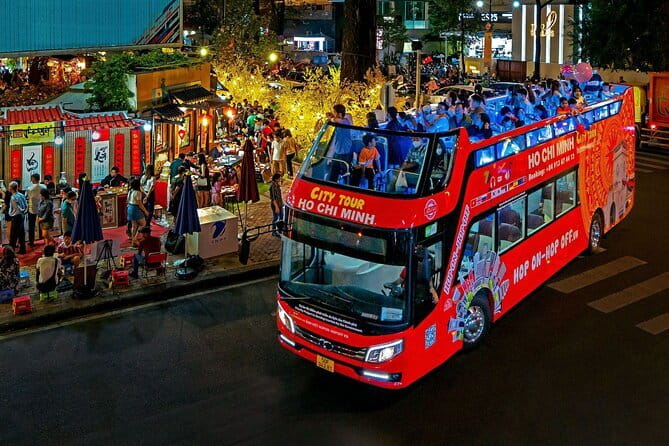
The tour is designed to get you close, not to replace your own exploring. That means the best results come from pairing the bus stop with a specific “next action.”
Here’s how to think about the stops:
Opera House and Nguyen Hue Street
Use this stretch to get your bearings and to spot directions for later. If you want photos, prioritize your camera time here. If you want structure, use the guidebook maps to decide where you’ll walk next.
Nha Rong Wharf and riverside views
This is a good reset spot. Step off if you want the city’s edges and water views. If you do not, keep riding and save your walking energy for markets and landmarks.
Museums zone for planning your energy
In the museum stretch, decide up front whether you will enter at least one major attraction. Entry is not included, so you will likely pick just one big stop unless your schedule is packed.
Pham Ngu Lao and Ben Thanh for food and browsing
This is where you can eat without overthinking. Even if you do not buy anything at Ben Thanh, the market stop can still work as a photo and people-watching break.
Independent Palace and Cathedral / Central Post Office for walkable landmark time
These stops are ideal for a slow wander. You can ride past, then step off when you want better angles and closer context.
Flower Market and pagodas for cultural variety
On Blue Route, don’t treat these as checklist boxes. If you are drawn to them, spend a little time looking around respectfully and then return to the bus before you lose track of your day.
Price and Value: Is $21 a Good Deal?
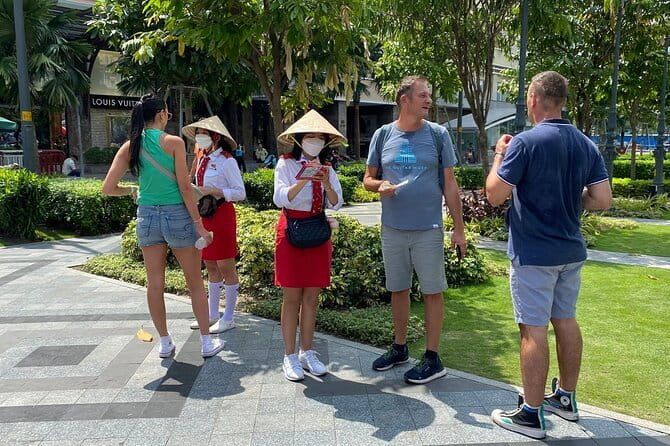
The stated price is $21.00 per person for this City Sightseeing Saigon bus tour, with 1-day or 2-day tickets available. Whether that’s a bargain depends on how you ride.
When $21 feels like a smart value
If you plan to use the hop-on hop-off flexibility in a meaningful way, you get value fast. You can hit multiple major sights across different neighborhoods without paying for separate transport each time. You also get free Wi-Fi, plus a guidebook with maps, recommendations, timetables, and coupons.
In a city like Ho Chi Minh City, where it can be easy to spend the morning negotiating your transportation plan, this tour can save time and stress.
When you might feel it’s not worth it
If you only plan to sit through one loop with no stepping off, you might feel like the money would be better spent directly on the attraction that interests you most. But for anyone building a day around multiple “must-see” spots, the ticket usually pays off.
Should you consider a 2-day ticket?
A 2-day ticket makes the most sense if you want a relaxed rhythm, not a sprint. The bus routes overlap in some central areas, but Blue Route also adds more market and pagoda stops. If those topics interest you, two days can give you a calmer pace.
Best Fit: Who This Tour Is For
This tour works best for:
- First-timers who want to get oriented quickly
- People who like choosing their own pacing, not following a strict schedule
- Visitors who want to see big landmarks like the War Remnants Museum, Ben Thanh Market, and central colonial-era sights without arranging separate transport
It might not be the best match if:
- You want a “story-driven, can’t-wait-to-hear-every-word” guide experience from start to finish
- You hate weather uncertainty, since upstairs open-top seating can be exposed
- You prefer tours that group attractions tightly with included admission and timed entries, because entry tickets are not included here
Should You Book the City Sightseeing Saigon Bus Tour?
I’d book it if your priority is practical sightseeing, fast orientation, and flexibility. You get a lot of major landmarks connected in one system, plus the free guidebook and Wi-Fi that helps your day run smoother.
I’d hesitate only if you are the type who wants deep guided interpretation and already has a tight plan with transport solved. In that case, you might prefer custom transport and targeted visits.
FAQ
Is this tour really hop-on hop-off?
Yes. You can join and leave the tour at your convenience from designated stops on both routes.
How long is the Red Route and how often do buses run?
The Red Route takes about 75 minutes, and buses run every 30 minutes. The first departure is 9:00 am and the last departure is 4:00 pm from Stop 1.
How long is the Blue Route and how often do buses run?
The Blue Route takes about 80 minutes, and buses run every 45 minutes. The first departure is 9:00 am and the last departure is 3:45 pm from its starting point.
Where do I board for each route?
For the Red Route, Stop 1 is the Saigon Opera House, and the ticket exchange counter is on the side facing the Continental Hotel. For the Blue Route, the bus stop is located in front of the Liberty Hotel at 187 Pham Ngu Lao Street.
Is the audio guide available in multiple languages, and is Wi-Fi included?
Yes, the bus includes an audio guide in several languages. Free Wi-Fi is also included.
Are attraction entry fees included in the ticket?
No. Entry to attractions is not included, so you will need to pay separately if you want to go inside museums or other sights.
If you want, tell me your rough dates and whether your priority is museums, markets, or photo landmarks, and I’ll suggest a simple way to split your time between Red and Blue.
More City Tours in Ho Chi Minh City


More Tours in Ho Chi Minh City
More Tour Reviews in Ho Chi Minh City
Not for you? Here's more nearby things to do in Ho Chi Minh City we have reviewed









Saigon City Highlights Tours, compared.
 ★ 5.0Ho Chi Minh City Motorbike Tour with Student | Saigon AdventureFrom $231,697 reviews
 ★ 5.0Afternoon Saigon Unseen Adventure by Scooter |Opt: Ao Dai RidersFrom $251,282 reviews
 ★ 5.0Small-group Saigon City Tour: 4-Hour Must-see Iconic LandmarksFrom $30788 reviews
 ★ 5.0Morning Saigon Unseen Adventure Scooter with Ao Dai Riders OptionFrom $25646 reviews
 ★ 5.0Private Cu Chi Tunnels Tour By Car | Saigon AdventureFrom $56527 reviews
 ★ 5.0Saigon Afternoon City Historical Scooter Tour |Opt: Ao Dai RidersFrom $25466 reviews
 ★ 5.0Morning Saigon Unseen+Street Food Tour with Ao Dai Riders OptionFrom $37421 reviews
 ★ 5.0Saigon Unseen, History, & Hidden Gems Sightseeing Motorbike TourFrom $33416 reviews
Browse the lists this tour appears in