
Reviewed · CU CHI TUNNELS TOURS
HCM: Cu Chi Tunnels-Tapioca Small Group Tour Morning or Afternoon
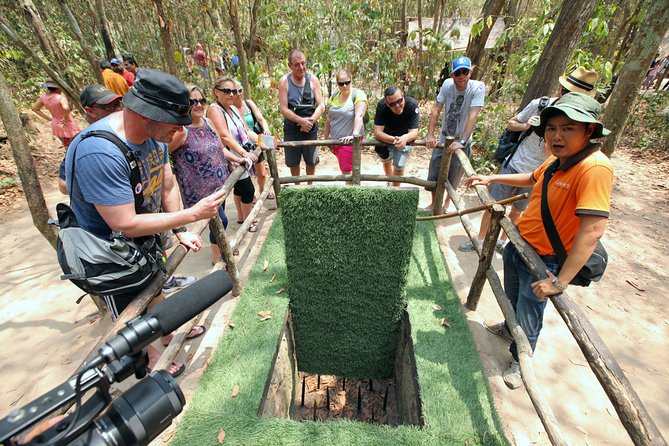
Cu Chi Tunnels hits fast, because you go underground and see how people survived. I like the format here: district pickup and drop-off makes it painless to get out to the site, and the tour time is long enough to cover more than just a quick look. You also get a focused introduction with a film, plus a guided walk through the tunnel maze and related war exhibits.
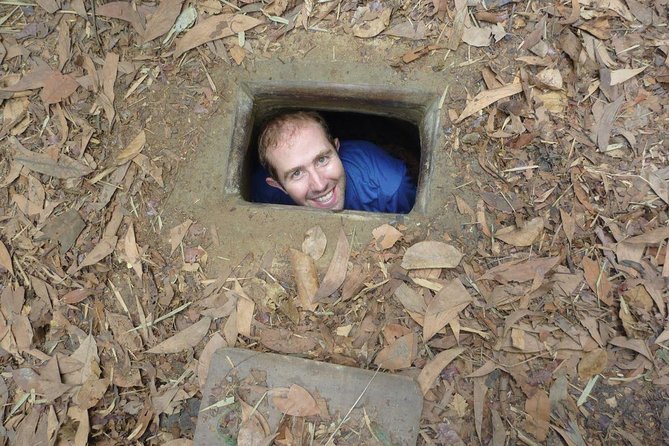
My favorite part is the mix of history and hands-on reality: you’ll see bunkers, guns, and traps, and then you have the option to crawl into a real section of tunnel. One thing to keep in mind, though, is that crawling and squeezing through tight spaces can be physically tough, especially if you’re tall, claustrophobic, or have mobility limits.
Key points I’d plan around
- Small group size (max 25) keeps things organized, without turning it into a cattle call.
- Pickup in Districts 1, 3, and 4 saves you the stress of figuring out transport on your own.
- Film first, tunnels second helps you understand what you’re looking at before you get cramped.
- Real food tie-in: cassava is built into the experience, not just a random snack.
- English-speaking guide with a track record for clear explanations and humor (guides like Bao, Phong, and Khanh are frequently praised for it).
- Agent Orange workshop stop may appear as an optional learning and rest stop, with souvenir shopping completely voluntary.
Cu Chi Tunnels, the HCMC day trip that actually feels organized
Cu Chi is about 60 km from Ho Chi Minh City, so the day has two moods: the ride out and the time on-site. This tour is set up to remove the usual friction, with hotel pickup from Districts 1, 3, and 4 and drop-off back in District 1. That matters because one of the biggest annoyances with war-site trips is spending your precious time negotiating rides, waiting around, and trying to match schedules.
You’re also not stuck in a huge crowd. The cap is 25 travelers, and you’ll be in an air-conditioned minivan. For a destination like Cu Chi, that small group size helps your guide manage the pace, and it makes it easier to ask questions without the whole group losing momentum.
The schedule is about 7 hours total, with around 2 hours at Cu Chi Tunnels itself. If your main goal is seeing the tunnel system and war exhibits in a respectful, guided way, that timing is realistic. If you want maximum downtime or a super relaxed day, you may find this feels like a structured itinerary, not a slow wander.
More Saigon tours, river trips, tunnel visits, and city experiences to compare


Pickup, van comfort, and why timing matters in Saigon heat
On paper, this is a morning or afternoon departure. In practice, the biggest variable is the weather and heat around Ho Chi Minh City. The tour is described as requiring good weather, which is important for a site that involves outdoor walking and warm conditions.
I’d treat the drive and the on-site time like two separate planning tasks:
- During the ride, you’ll want your water and sunscreen ready. Bottled water and tissues are included, which helps.
- On-site, you’ll likely move between exhibits and outdoor areas before the tighter parts of the tunnels.
A practical note from the tour’s overall feedback is that vehicle quality can vary. Some people liked the ride and comfort, while others pointed out an older or dirtier minivan and tight seats. You cannot control that once you’re booked, but you can reduce the sting by bringing small comfort items like a light layer, a hat, and something for your feet.
Your guide experience, from clear explanations to keeping the group together
A strong guide can make the difference between seeing tunnels as a tourist prop and understanding them as a survival system. This tour includes an experienced English-speaking guide, and the tour’s reputation is tightly linked to guides who explain clearly and keep things lively. Names that show up in the guide praise include Mr. Bao, Khanh, Phong, Luna, and Tommy, with multiple mentions of humor plus structured explanations.
Why that matters to you: Cu Chi is confusing if you just follow signs. The tunnel network isn’t laid out like a museum hallway. A good guide helps you connect the “what” with the “why,” like how hiding entrances worked, what trap doors were for, and how storage and field hospital areas fit into daily operations.
One more social detail: in tight spaces, the group needs careful management. There are mentions of guides counting people and making participants feel safer during the experience. That’s a big deal at Cu Chi, where the tunnel sections can feel smaller than you expect.
The film stop before the tunnels, so the place makes sense
Before you get underground, the itinerary includes a film introduction. You’ll watch a presentation about the largest American ground operation of the Vietnam War, plus a documentary screening on the strategic system of the Cu Chi Tunnels. Think of this as your orientation map, not just entertainment.
In the ideal flow, you leave the film with three things:
- A basic timeline for how the network was used, from the early 1960s through 1972.
- The idea that tunnels were not only for hiding, but also for living, moving, and working.
- The notion that the underground system included connected functions, like command areas, kitchens, and field hospitals.
One tricky point for expectations: there is mention of a paid 3D option in some contexts, while the tour itself emphasizes a documentary film screening as included. So if you’re someone who really cares about which format appears, plan to treat the film stop as “part of the introduction,” not a guaranteed 3D feature every single time.
Cu Chi Tunnels War Exhibits, what you see above ground
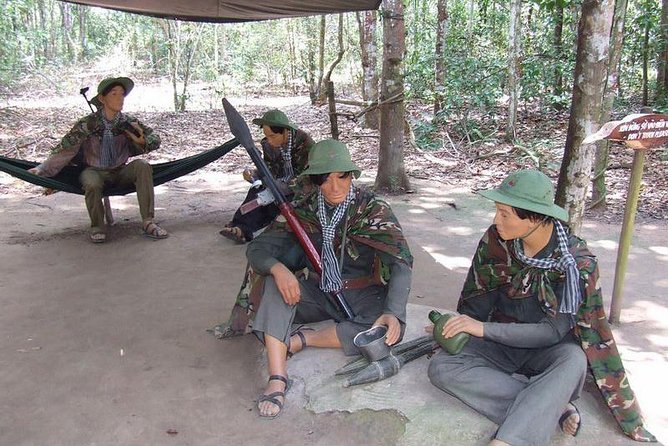
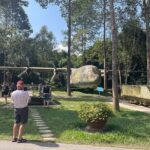
Not everything is inside the tunnels. The tour also includes time at the War Exhibits area, where you’ll see relic-style items like bunkers, guns, and traps. This above-ground portion matters because it gives you contrast. If all you saw was the underground maze, you might miss how the Viet Cong adapted to constant danger and how the site was designed to respond to outside threats.
In the wider feel of the day, these exhibits work like the “before and after” section of the story. You get a look at the tools and defensive setups first, and then the tunnel portion explains how those ideas translated into daily survival underground.
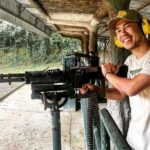
Some people also mention an extra activity like a firing range stop being part of their day. That’s not spelled out in the core itinerary details you’re given, so I’d treat it as optional or day-dependent rather than a sure thing. If it’s offered on your departure, it can be a fun contrast, but keep your focus on the main reason you’re there: the underground network and what it meant for life during the war.




Exploring the underground maze, storage, kitchens, command centers
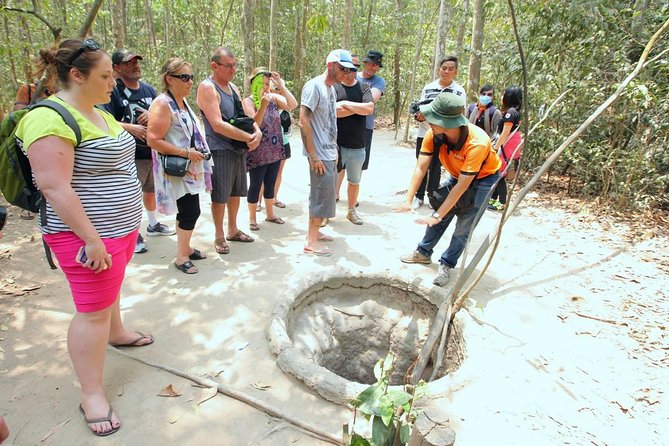
Once you’re at Cu Chi, the guided walk focuses on how the tunnel system worked and what daily life looked like inside. Expect stops that explain:
- how hiding entrances were used to move safely
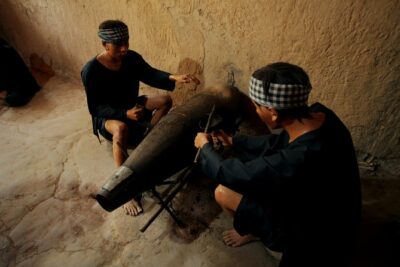
- how the network functioned as both shelter and workspace
- areas connected to command, storage, kitchens, and field hospital activity
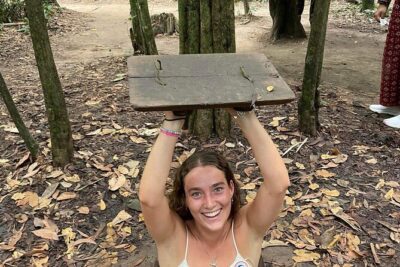
- trap-door style features that helped protect key routes
The key is that the tunnels are not just one tunnel. They’re a system with branching routes and practical “rooms,” and a good guide keeps the story connected so you don’t feel like you’re simply walking through random passages.
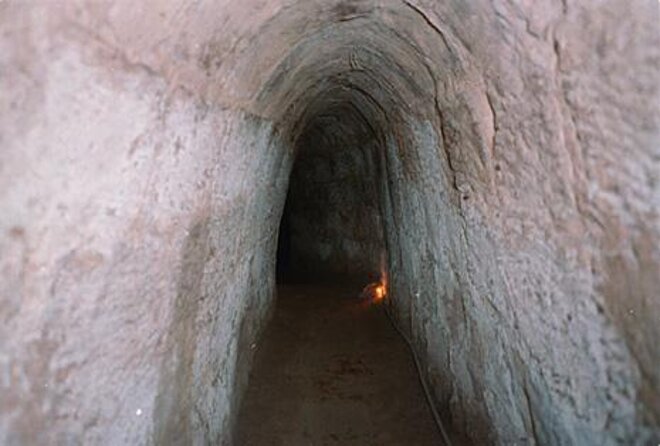
A useful expectation to set: passages for modern visitors can feel different from what you might imagine from old photos. Some sections are widened or simplified for safety, so the tunnel experience you get today may feel less like a layered, multi-level labyrinth and more like a guided route through a representative portion. That does not make it less meaningful, but it helps you adjust your mental picture before you step in.
Crawling through the tunnels, what to know before you commit
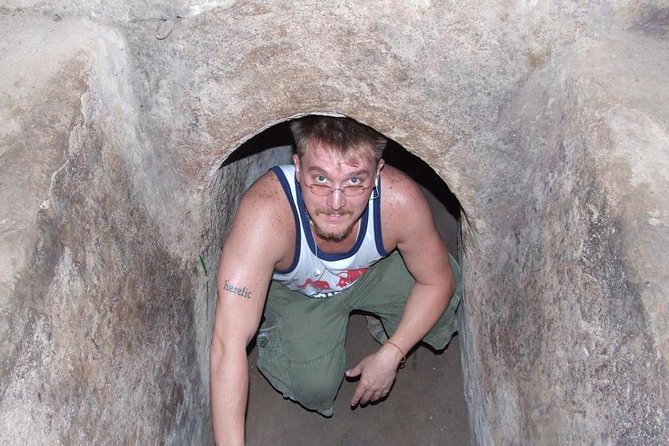
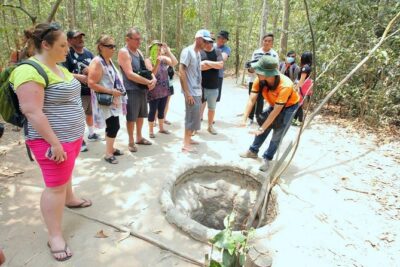
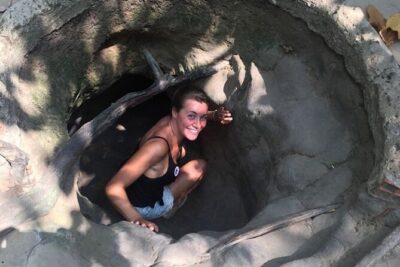
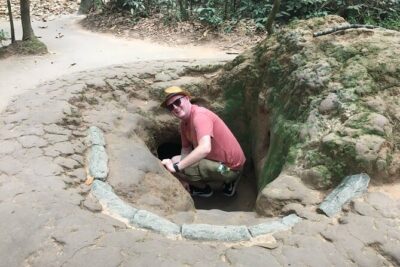
Crawling is listed as an optional experience, and the itinerary also mentions that you can crawl into a real tunnel section during the tour. Either way, you should plan for real physical constraints. One mention in the supplied details describes a crawl about 60 meters long, in a space roughly 4 feet high.
Here’s what that means for you:
- If you’re taller or broad-shouldered, you may have a hard time getting comfortable enough to move.
- If you’re claustrophobic, this is the moment to decide how far you want to go.
- If you have any knee or back issues, the crawling motion can be rough.
I’d approach it like this: treat the tunnel crawl as optional courage, not a requirement. You’ll still learn a lot from seeing the entrances, trap areas, and exhibit explanations above ground. If you choose to crawl, do it slowly, follow your guide’s instructions, and focus on safety over pride.
Cassava and tunnel rations, the food part that actually teaches
The tour includes a food tie-in linked to what people ate on war days. You’ll have tapioca, Vietnamese hot tea, and a snack listed as wheat cake, plus bottled water and wet tissues. The itinerary also calls out cassava as the most popular food during war days at Cu Chi.
This is not the usual “tour bus snack stop.” It’s a small but smart way to connect daily survival to the underground story. Cassava is resilient, grows in tough conditions, and fits the broader theme of adaptation and resourcefulness. Even if you don’t love the taste, the meaning is the lesson.
Forest area documentary, learning the strategy behind the maze
In addition to the initial film, the itinerary includes time in the forest area and a documentary that explains the strategic system of the Cu Chi Tunnels. This segment is valuable because it shifts you from “what the tunnels are” to “how they were used.”
You start to see the logic of defense: the network wasn’t only about hiding. It was also about movement, communication, and the ability to respond to threats. A good guide connects the outdoor strategy talk back to the underground features you just saw.
Agent Orange workshop stop, a rest break with a real-world edge
Some versions of this tour appear to include a stop connected to Agent Orange. The information provided says it functions as a rest stop with facilities and also raises awareness about the victims of Agent Orange whose legacy continues.
What you should plan for:
- You may have a brief stop at a workshop tied to this topic.
- Buying souvenirs is described as completely voluntary.
- If shopping isn’t your thing, you can use the break to rest, and then continue with the main tunnel experience.
This part of the day can add emotional weight compared to purely technical tunnel explanations. That doesn’t make it bad. It just means you should go in prepared for a different tone, one that acknowledges long-term human impact, not only wartime engineering.
Price and value, why $14.90 can still be a smart move
At about $14.90 per person, this is priced like a budget-friendly day, and the value comes from how much is included. You’re getting:
- pickup and drop-off in specific HCMC districts
- an English-speaking guide
- air-conditioned transport
- entrance fees
- at least one documentary film screening
- snacks and drinks tied to the tunnel story, including cassava and tapioca
- bottled water plus tissues
The trade-off in any low-cost guided tour is not always visible until you’re there. For example, some feedback points to uneven match between what people expected and what they received, including missing a particular 3D format or feeling the on-site time could be more extensive. Other comments mention guide phone distractions or perceived shuffling into a workshop stop.
My practical take: this tour is a great value if your priorities are guided orientation, a respectful overview, and the tunnel crawl option. If your top priority is maximum time inside every detail of the tunnel system, you might feel the structure is a bit fast. Set your expectations around a guided highlights experience, not an all-day expedition.
Who this Cu Chi small group tour fits best
This tour is a strong match for you if:
- you want a guided introduction that makes the site easier to understand
- you like practical learning, like seeing trap features and hearing the survival logic
- you want small group structure instead of DIY stress
- you’re interested in learning how people lived and adapted underground between 1961 and 1972
It may not fit as well if:
- you want lots of free time to roam without guidance
- you strongly dislike tight spaces, even if the crawl is optional
- you expect every departure to include a specific paid 3D add-on experience
Also, it works for families only if kids are able and willing to participate, since children must be accompanied by an adult.
Should you book this Cu Chi Tunnels tour from Ho Chi Minh City?
Book it if you want the most efficient way to see Cu Chi Tunnels with pickup convenience, a structured guided flow, and food like cassava that actually ties into the story. The biggest “win” is the balance of above-ground exhibits, film context, and a tunnel crawl option, all wrapped into a full day without you doing route planning.
Skip or consider a different approach if you know you will struggle with cramped spaces or you’re very sensitive to vehicle comfort and guide pacing. In that case, you may prefer a tour format that offers longer on-site time or a less rigid itinerary.
If you do book, pack for the realities: heat, tight spaces, and time on your feet. Bring a hat, sunscreen, and comfortable shoes, and decide ahead of time how far you want to go with the crawl. That way, you get the meaning without turning it into a test you did not sign up for.
FAQ
How long is the Cu Chi Tunnels tour from Ho Chi Minh City?
It runs for about 7 hours total, with around 2 hours at the Cu Chi Tunnels site.
Do I get hotel pickup and drop-off?
Yes. Pickup is offered from hotels in Districts 1, 3, and 4, and the tour drops you back in District 1.
What language is the guide?
The tour includes an experienced English-speaking guide.
Is the tunnel crawling included, or is it optional?
Crawling through the tunnels is listed as an optional experience, though the itinerary indicates you may be able to crawl into a tunnel section during the visit.
What film or presentation is included?
You’ll watch a film at the tunnels, and the included list specifically notes watching the Cu Chi Tunnels documentary film.
What food and drinks are included?
Included snacks and drinks include cassava, tapioca, Vietnamese hot tea, wheat cake, bottled water, and wet tissues.
Is there a limit on group size?
Yes. The tour has a maximum of 25 travelers.
What is the cancellation policy?
You can cancel for free up to 24 hours in advance for a full refund. The tour may also be canceled for poor weather, with an offer of a different date or a full refund.
More Morning in Ho Chi Minh City



More Tours in Ho Chi Minh City
More Tour Reviews in Ho Chi Minh City
Not for you? Here's more nearby things to do in Ho Chi Minh City we have reviewed








Cu Chi Tunnels Tours, compared.
 ★ 5.0Cu Chi Tunnels Tour from HCM City – Morning or AfternoonFrom $1515,833 reviews
 ★ 5.0Cu Chi Tunnels and Mekong Delta Signature TourFrom $337,328 reviews
 ★ 5.0Cu Chi Tunnels & Mekong Delta Tour with VIP Limousine TransferFrom $567,052 reviews
 ★ 5.0Cu Chi Tunnels and Mekong Delta Full Day Tour – Max 12From $436,257 reviews
 ★ 5.0Cu Chi Luxury Group Tour – Tapioca and Cake Half DayFrom $213,375 reviews
 ★ 5.0CuChi Tunnels&Mekong Delta-Boat,TukTuk,Coconut Village SmallGroupFrom $323,113 reviews
 ★ 5.0Adventure Cu Chi Tunnels and Mekong Delta Tour From HCMFrom $292,869 reviews
 ★ 5.0CuChi Tunnel Tour: The Legendary Underground NetworkFrom $222,828 reviews
Browse the lists this tour appears in