
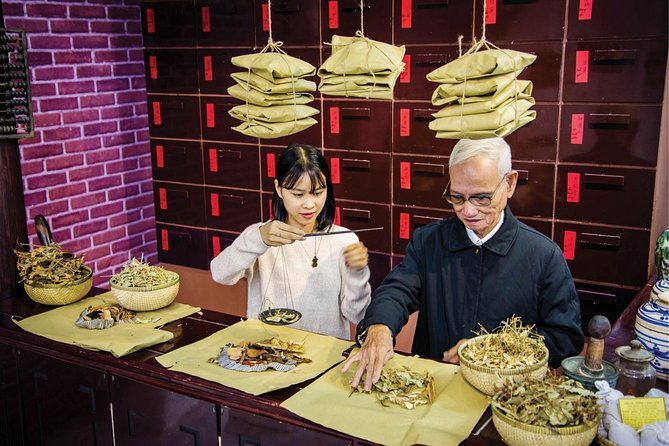
Reviewed · SAIGON WAR HISTORY TOURS
Ho Chi Minh Most Historical Spots & War Museum Tour (Private & All-Inclusive)
Saigon history feels personal on this guided loop. You start at the War Remnants Museum, then shift to memorials and pagodas, and finish with classic landmarks and viewpoints, all with a private English-speaking guide.
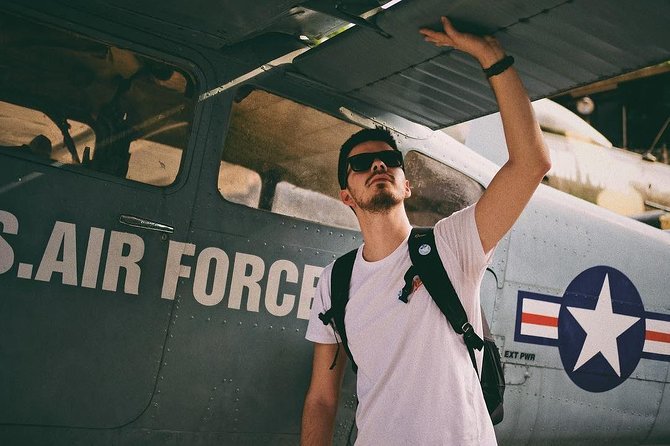
I love the hotel pickup at 9:00 and the return around late afternoon, so the day feels controlled instead of chaotic. I also love the museum’s headset numbers and earphones setup, which helps you choose what details to focus on while you look at planes and weapons.
The only real drawback is that the War Remnants Museum is intense and can be emotionally heavy, so give yourself a little downtime after it.
Key things I’d plan around

- War Remnants Museum with headset earphones to match photos of planes and weapons with specific info
- Private, hotel-to-hotel flow in an air-conditioned vehicle, with an English-speaking guide
- Thich Quang Duc’s memorial stop plus a calmer pagoda visit for spiritual context
- FITO Museum admission included, with traditional design meeting modern museum structure
- Big-name Saigon sights grouped in one day, from French-era architecture to city views
Entering the War Remnants Museum in Ho Chi Minh City

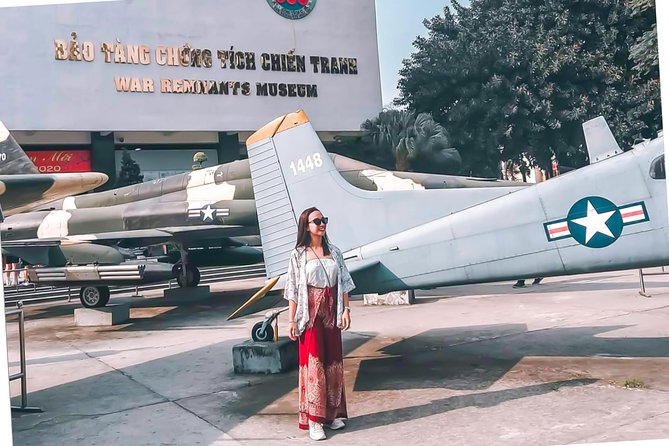
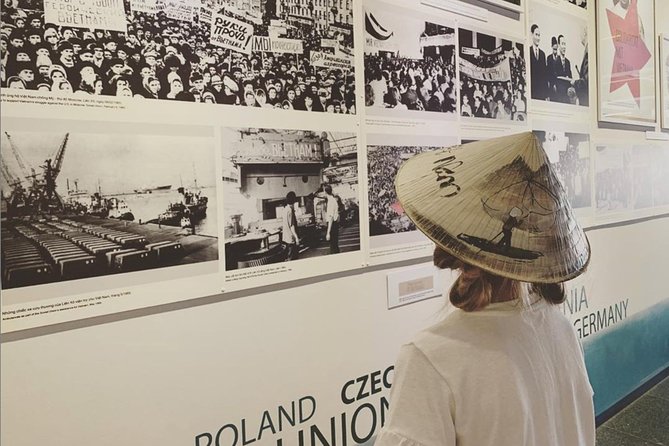
The day starts with a museum that does not try to soften the facts. At the War Remnants Museum, you are walking into one of the most direct places in Ho Chi Minh City for understanding the Vietnam War through documents, photos, and testimony. It first opened in 1975, and it was once known as the Museum of American War Crimes, so the tone is clear from the start.
One reason this stop lands so well on a guided day is the way the visit is structured. You can use earphones and press the corresponding number on a headset to get specific information about what you are looking at, including aircraft and weapons. That matters because it turns a tough wall of images into something you can actually process. You are not guessing, and you are not stuck staring with no context.
The practical tip here is simple: go in with a mindset of slow. Some rooms are emotionally confronting, including areas tied to war crimes and Agent Orange. If you are sensitive to graphic content, you might want to take breaks between rooms, and you might prefer to stand back from a display before reading everything at once.
If your guide is Ocean, take note. In the feedback I saw, Ocean is praised as very polite and well informed, with a passion for explaining what you are seeing. On a visit this heavy, that kind of guidance can make the museum feel more readable instead of overwhelming.
You can also read our reviews of more private tours in Ho Chi Minh City



How the guide-led pace keeps the story understandable
This is a private tour, meaning only your group travels with the guide. That sounds like a small difference, but it changes everything when you move between topics like war history, memorials, and then everyday Saigon landmarks.
You get picked up from your hotel around 9:00 AM (the exact time can vary by location), then you ride in a comfortable, spacious, air-conditioned vehicle while your guide sets up the day. That matters because Ho Chi Minh City distances can add up fast, and you do not want to lose your energy before the museum.
A second advantage of a guided rhythm: you get transitions. After the museum, you do not just jump to random sights. You move into a memorial tied to a specific protest moment, then into a pagoda that reflects local religious life. The day keeps building context, even when the subject matter changes.
And because the plan includes fixed stops, you also get a built-in way to pace yourself. You return to your hotel around 4:30 PM (again, timing can vary by where you stay). That helps if you do not want to spend your whole vacation sprinting through sites.
Thich Quang Duc’s monument, and why it changes the mood
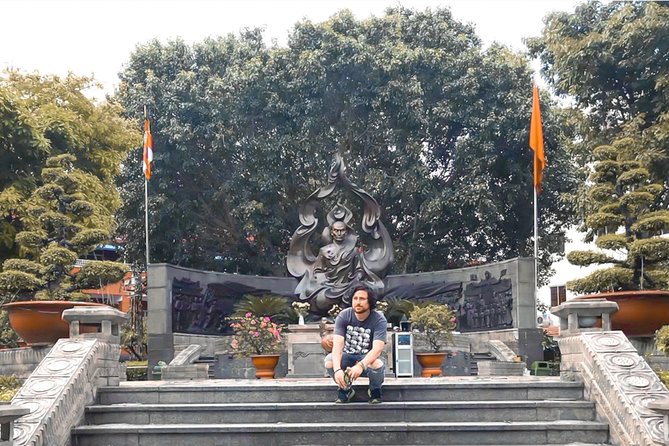
After the museum, the itinerary turns toward reflection. The Venerable Thich Quang Duc Monument is dedicated to the Buddhist monk who self-immolated in protest at this intersection in 1963, not far from today’s Reunification Palace.
This stop is not about sightseeing the way a photo tour is. It is more like a pause in the narrative. You get a quiet memorial park setting, and you are reminded that the war story includes moral and spiritual choices, not only battles and politics.
A practical angle: this is a good moment to reset your head. If you felt shaken at the museum, you will likely appreciate the shift in atmosphere. Your guide can also help you connect the timeline of 1963 into the bigger arc of events that the later landmark sites represent.
Chantarangsay Pagoda and a Theravada presence in the south

Next comes Chùa Chantarangsay, a Khmer pagoda for the Khmer people in southern Vietnam. The pagoda also has monks from the Theravada sect, one of the oldest branches of Buddhism.
This is one of the best stops on the day for balance. You have just processed a war museum, then you step into a living religious space tied to a specific community. If you want your time in Ho Chi Minh City to feel more grounded than just politics and architecture, this is where you get that.
It is also a low-friction visit. The admission is listed as free, so it is easy to include even if your energy is not at peak levels. Expect a calmer pace and a chance to observe local religious life, not just historical events.
FITO Museum: the science and medicine angle you might miss
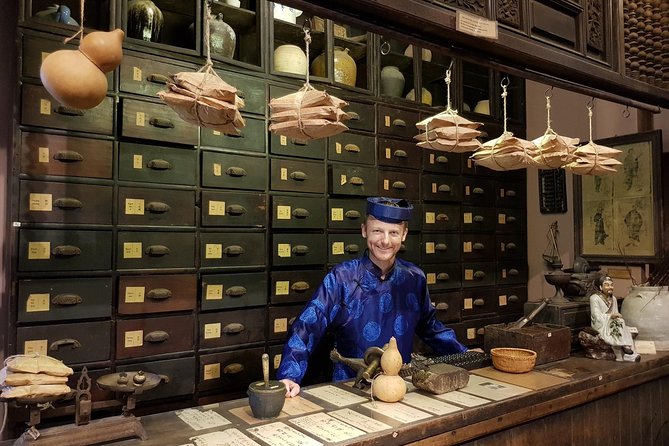
The next big stop is the FITO Museum. It has a design that blends traditional and modern architecture, and it is laid out over one ground floor plus five upper floors. The museum includes 18 exhibition rooms.
What makes this a smart addition is that it breaks the pattern. A war-and-landmarks day can become one-dimensional, but FITO adds a human scale topic: traditional medicine and pharmacy. The museum visit is also marked with admission included, and the time here is long enough to feel like more than a quick photo stop.
If you like museums that explain how culture shows up in daily life, you’ll likely enjoy the way the FITO Museum covers more than one style of storytelling. You might see delicately carved wooden pictures and other exhibition elements as you climb through the floors.
The main consideration is pacing. After intense memorial and museum content, you may need a moment to switch your brain from trauma and protest into learning and displays. Give yourself that mental transition, and FITO can feel like a release instead of another heavy subject.
You can also read our reviews of more historical tours in Ho Chi Minh City






Where the French-era architecture and city icons fit in
Once you hit the central sights, your guide usually helps you connect what you see to the city’s layered past. Even when a stop feels like classic architecture, the value is in how it fits into Vietnam’s modern identity.
Here are several of the city landmarks included in the route, and what to watch for:
Turtle Lake roundabout as an orientation point
You’ll pass Turtle Lake roundabout at the cross streets of Vo Van Tan, Pham Ngoc Thach, and Tran Cao Van. The lake officially is named Cong Truong Quoc Te, and the surrounding street is called Cong Truong Quoc Te.
This is not a must-see attraction in the same way a cathedral is. But it’s useful because it helps you track where you are in the city and gives you a visual anchor for later photo stops.
The Nguyen Dinh Chieu Street little house and the weapon hiding story
Then there’s the Nguyen Dinh Chieu Street little house, a National Monument of Culture. It was a hiding place for nearly two tons of Saigon Commandos weapons during the spring offensive and 1968 uprising.
This kind of stop is powerful because it zooms in on a specific, local story instead of only big-picture war coverage. You can think of it as a reminder that war history also lives inside small buildings and street corners.
Tan Dinh Church and what survives through time
Tan Dinh Church Saigon is included as well. It’s a Romanian-style church built in 1876, and it still shows intricate Gothic and Renaissance elements that survived Vietnam’s turbulent periods.
If you like architectural details, this is a satisfying pause. Look for the way styles and influences show up in one building rather than forcing them into separate categories.
Bitexco Sky Deck: a city view break
For a viewpoint, the route includes Bitexco Financial Tower and Sky Deck. The tower is 262 metres high, and the Sky Deck is designed for city views.
This is your chance to shift gears visually. After memorials and museums, a high viewpoint can help your brain reset, even if only for a few minutes.
District 1 classics: opera, post office, cathedral, and market life
If Ho Chi Minh City is new to you, this part of the day helps you get your bearings fast in the most walkable zone.
Dong Khoi Street and the Rue Catinat connection
Dong Khoi Street is tied to French occupation history, when it was the centre of glamour and known as Rue Catinat. Today it still works as a key corridor for city walking.
The value here is not only the old names. It is seeing how the city’s energy moved from colonial-era glamour into a modern commercial core.
Saigon Opera House
The Saigon Opera House is another classic landmark in the route, described as an elegant colonial building at the intersection of Le Loi and Dong Khoi Street, close to Notre Dame Cathedral and the Central Post Office.
Even if you do not catch a performance, the exterior and location help you see why this area became a cultural hub.
Ben Thanh Market for souvenirs and snacks
You also get time at Ben Thanh Market in District 1. It’s a solid place for handicrafts, branded goods, Vietnamese art, and other souvenirs, plus eating stalls inside the market.
A practical move: if you want to shop here, save a little energy. Markets take time, and you might not want to shop when you are running on museum fatigue.
Reunification Palace as a key timeline anchor
Reunification Palace is a major stop. It was the base of Vietnamese General Ngo Dinh Diem until his death in 1963. It became globally known in 1975, and the site includes the detail of a tank belonging to the North Vietnamese Army crashing through the main gate.
This is where many war timelines suddenly feel concrete. The palace setting makes history feel less like a chapter and more like an environment where decisions happened.
Saigon Central Post Office and the style blend
The Saigon Central Post Office was constructed from 1886 to 1891. It shows Gothic, Renaissance, and French colonial design. The data also notes a common misconception about crediting Gustave Eiffel, which is the kind of detail that a guide can help you keep straight.
Ho Chi Minh Square, Uncle Ho, and French-era framing
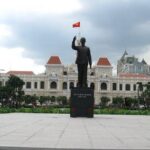
You’ll also see Ho Chi Minh Square, surrounded by French colonial style buildings. It includes a statue of Uncle Ho placed there in 1981, according to the description.
If you like symbolic city centers, this is one. If you like photography, it’s also one.
Notre-Dame Cathedral Basilica of Saigon and City Hall
The route includes Notre-Dame Cathedral Basilica of Saigon, a downtown cathedral tied to French colonists. You’ll also see Ho Chi Minh City Hall, built in 1902 to 1908 in French colonial style, later renamed after 1975 as Ho Chi Minh City People’s Committee.
These two stops work like bookends for the colonial-era architecture feel, right in the core of today’s city.
When your day includes showtime and cultural performance
The route includes À Ố Show, described as a Vietnamese bamboo circus performance. The day can also include water puppetry, a tradition dating back as far as the 11th century from villages of the Red River Delta.
For many people, these cultural elements are what keeps the day from becoming too heavy. They also give you a Vietnam you might not see if your trip only focuses on museums.
A practical note: performances can eat up time in a tight schedule. If you are the type who wants everything to go at a smooth pace, you’ll appreciate having a guide to keep your timing and priorities organized.
If Cu Chi tunnels are on your route, plan for the extra travel time
The itinerary lists a stop at the Cu Chi tunnels, described as an immense network of connecting tunnels underlying much of the region in Cu Chi District.
Cu Chi is farther from central Ho Chi Minh City than the District 1 sites. If your day includes it, you will likely spend more time in transit and you should plan accordingly, especially if you are already feeling emotionally drained from earlier war content.
You do not need to be an expert to appreciate the stop. The value is in understanding how people adapted to war conditions in a place where the ground itself became part of survival.
Price and “all-inclusive” value, what you really get
At $133 per person for a private 6 to 7 hour tour with pickup, transport, and mobile ticket support, you are paying for time, access, and a guided narrative.
Here’s what makes it feel like value based on the included parts:
- Private pickup from your hotel and return, which saves you planning stress
- Admission included at the War Remnants Museum and the FITO Museum
- Some stops have free admission, including the Thich Quang Duc Monument and Chantarangsay Pagoda
- A guide who can connect landmarks to the timeline, especially helpful at the War Remnants Museum
The main cost question I’d ask you is this: do you want a guided story across multiple topics in one day? If yes, this price usually makes sense. If you just want to casually browse a few sights on your own schedule, you could spend less by picking a couple of locations and skipping the rest.
Should you book this Ho Chi Minh history and war museum tour?
I’d book it if you want:
- A private guided day with less guesswork
- The War Remnants Museum visit with a structure that makes the content easier to follow
- A mix of war memory, memorials, pagodas, and major Saigon landmarks
- A guide like Ocean, who is described as very polite and strong at explaining what you are seeing
I would think twice if:
- You know you struggle with graphic or emotionally intense museum content
- You prefer light, “fun first” sightseeing with minimal weight
- You do not want cultural performances or longer transit if Cu Chi tunnels are included
If you are okay with intensity and you want your day to connect the dots across Saigon’s past and present, this tour is a strong way to spend it.
FAQ
How long is the Ho Chi Minh Most Historical Spots and War Museum Tour?
It runs about 6 to 7 hours.
What time does hotel pickup happen?
Pickup starts at 9:00 AM, with the exact time varying based on your location.
What is the first stop on the tour?
The day begins with a visit to the War Remnants Museum.
Is admission included for the War Remnants Museum and FITO Museum?
Yes. Admission tickets are included for the War Remnants Museum and the FITO Museum.
Are any stops free?
Yes. The Thich Quang Duc Monument and Chùa Chantarangsay are listed as free admission.
Is there lunch time during the tour?
The schedule includes a lunch time around 11:30 AM, but the details of what is provided are not specified.
Is this a private tour?
Yes. It is private, and only your group participates.
Do I receive a mobile ticket?
Yes. Mobile tickets are part of the experience.
Is there free cancellation?
Free cancellation is available, and you can cancel up to 24 hours in advance for a full refund.
Is the tour near public transportation?
The experience is listed as near public transportation.
More Private Tours in Ho Chi Minh City


More Tours in Ho Chi Minh City





More Tour Reviews in Ho Chi Minh City
Not for you? Here's more nearby things to do in Ho Chi Minh City we have reviewed






Saigon War History Tours, compared.
 ★ 5.0Adventure Cu Chi Tunnels: Vietnam War Underground Network AM/PMFrom $132,726 reviews
 ★ 5.0Cu Chi Tunnels Half-Day Tour: Vietnam War Underground NetworkFrom $232,587 reviews
 ★ 5.0Cu Chi Tunnels Half-Day Tour: Big Group Vietnam War ExperienceFrom $192,386 reviews
 ★ 4.5War Remnants Museum – Ho Chi Minh City Half Day ToursFrom $3988 reviews
 ★ 5.0Cu Chi Ben Duoc Tunnel & War Museum – Original, Less TouristyFrom $2780 reviews
 ★ 5.0Cần Giờ Eco-Tour with Monkeys, Crocs & War HistoryFrom $3259 reviews
 ★ 5.0Cu Chi Tunnels by Jeep The Ultimate Off-Road War History TourFrom $9925 reviews
 ★ 5.0Cu Chi Tunnels Guided Tour – Explore Vietnam War HistoryFrom $238 reviews
Browse the lists this tour appears in