
Reviewed · MEKONG DELTA TOURS FROM SAIGON
Mekong Delta Tour 2-Day (SaDec – Can Tho – My Tho – Ben Tre)
The Mekong Delta feels big, but this tour keeps it practical. You get Sa Dec flower-and-craft stops plus a proper morning at Cai Rang Floating Market, then you roll into Can Tho for an overnight and come back on day two by boat through coconut country. It is a well-packed route for a $92 base price, especially with meals, entry fees, and one Can Tho hotel night included.
I like the balance here: quiet heritage moments in Sa Dec, then real daily life on the water in Can Tho. You also have several hands-on style food stops, like fruits and honey tea, and you are not just looking from far away. One thing to consider, though, is that this kind of tight, multi-stop schedule can shift if the operator needs to adjust day-to-day timing.
Key things I’d watch for
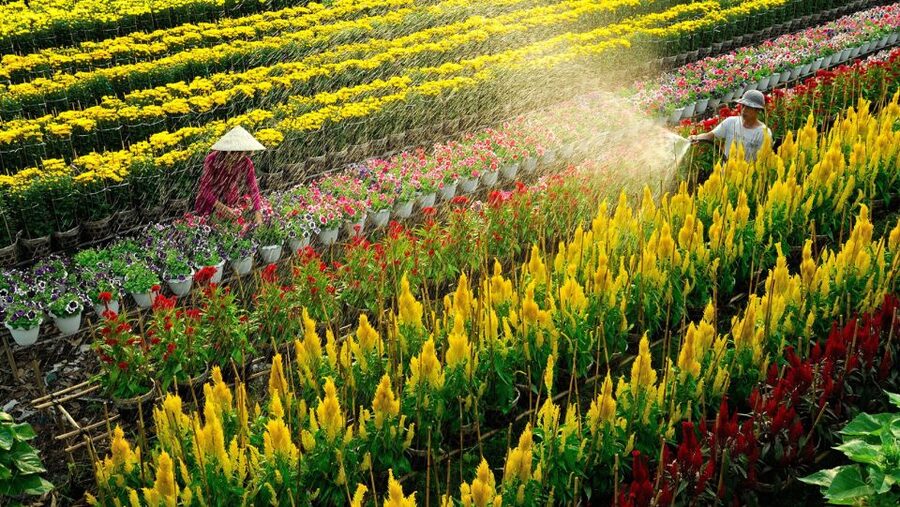
- Sa Dec flower village details: 313 hectares, 1,968 households, and it sits beside the Tien and Sa Dec rivers for easy transport.
- Craft villages in Con Lan and Con Phung: the tour focuses on traditional making, not only scenic viewpoints.
- Cai Rang Floating Market by boat: you can board a merchant boat during the market visit.
- Can Tho overnight: you get a full second day rhythm rather than rushing everything in one morning.
- My Tho and Ben Tre by canals: Phoenix Island, Unicorn Island, a bee farm, row boats, and coconut candy villages.
A 2-day Mekong Delta loop that actually makes sense
This itinerary is built like a connector route through southern Vietnam. Day one is about getting you from Ho Chi Minh City into the Sa Dec area, then finishing in Can Tho with an overnight. Day two starts early with the most famous boat activity, Cai Rang Floating Market, then continues across My Tho and Ben Tre before returning to Ho Chi Minh City in the early evening.
That structure matters, because the Mekong Delta is not something you can taste properly if you only do it as an afternoon trip. With one night in Can Tho, you get a calmer pace at the start and you avoid the all-day “we never stop” feeling that some one-day cruises create. It also gives you a place to reset your feet and your head before the boat-heavy day two.
More Saigon tours, river trips, tunnel visits, and city experiences to compare

Getting there on an air-conditioned coach, and why pickup timing matters
You ride in an air-conditioned tourist coach with an English-speaking guide. The standard start time is 7:30am, and smaller time tweaks exist depending on the hotel level you choose. Pickup is included, and you should wait in the lobby about 10 minutes before the scheduled time.
This is one of those tours where timing is not a small detail. When you are bouncing between river towns, every half hour affects how much you actually see. Bring water, wear something light but not thin, and keep your day bag small enough that you can handle transfers without turning it into a chore.
Group size is capped at 15 participants, which is the sweet spot for this area. You get the ease of a guided circuit, but you are not stuck in a huge bus crowd at every stop.
Day one in Sa Dec: flowers, pagodas, and traditional village life
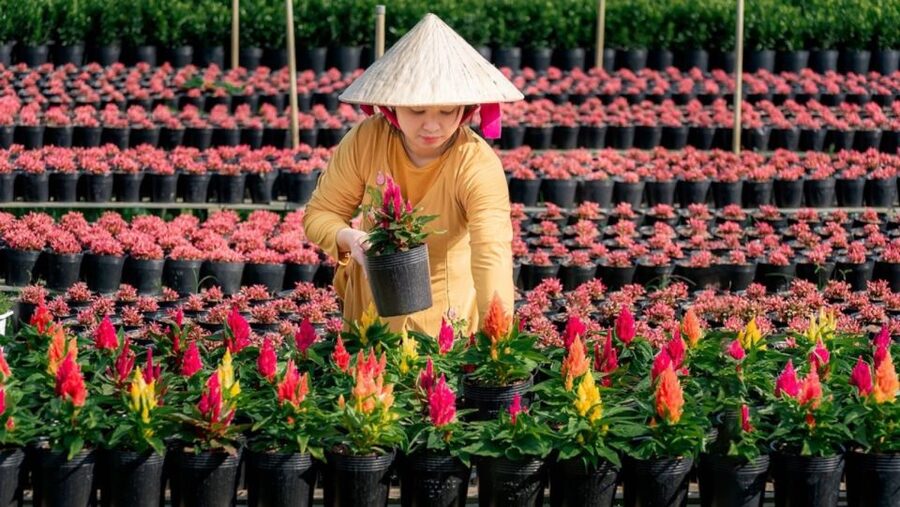
Day one starts with travel from Ho Chi Minh City to Sa Dec. Once you arrive, you spend time in several heritage-focused stops before heading toward Can Tho.
The Sa Dec ornamental flower village and its river setting
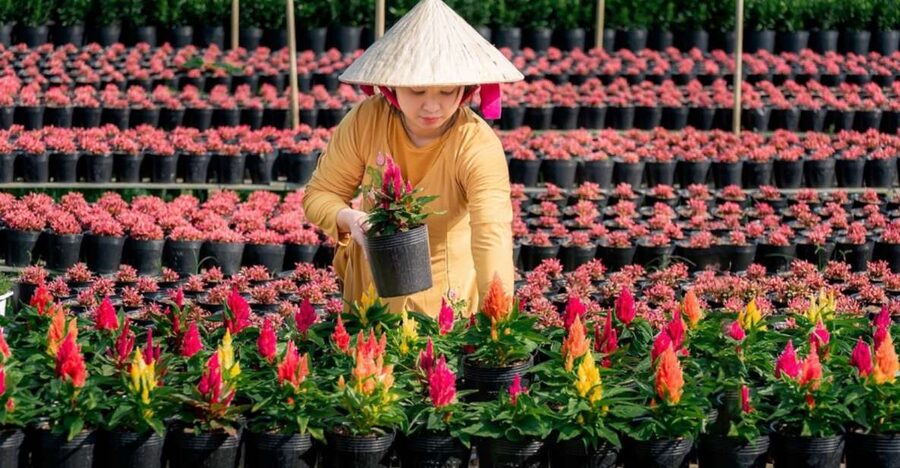
The Sa Dec flower village is described as about 3km from the city center, spread over 313 hectares with 1,968 households. What I like about this kind of detail is that it tells you it is not just a single viewpoint. The strength is practical: it has two sides adjacent to the Tien and Sa Dec rivers, so people historically moved goods and visitors by both waterway and road.
You also visit a rustic tourist area connected to the flower village, aimed at pairing the local river feel with tourism. The tone here is less “big commercial attraction” and more “small-world rural Vietnam,” which is what many people are after when they choose this area.
Kien An Cung Pagoda and Chinese ancestor roots
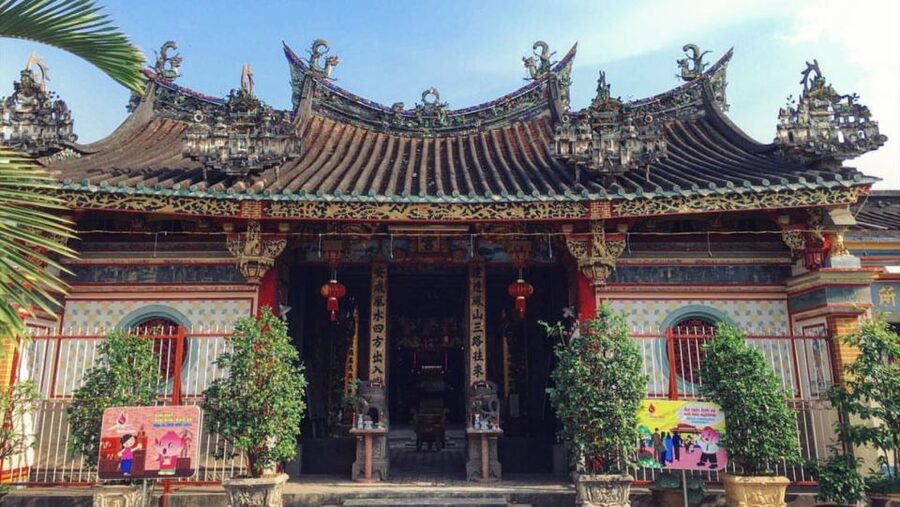
Next comes Kien An Cung Pagoda, also known as Ong Quach Pagoda. The tour notes it was built by a group of Chinese from Fujian, connected to ancestor worship and community organization, including trading and exchanging information. It also includes a timeline, with key construction phases completed between 1924 and 1927.
Even if you are not a worship routine person, this kind of context helps you read what you are looking at. The pagoda is not an isolated building. It is part of a community story, which makes the visit feel more grounded.
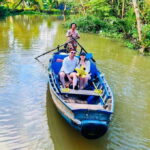
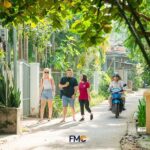
Huynh Thuy Le Ancient House: French outside, Chinese inside
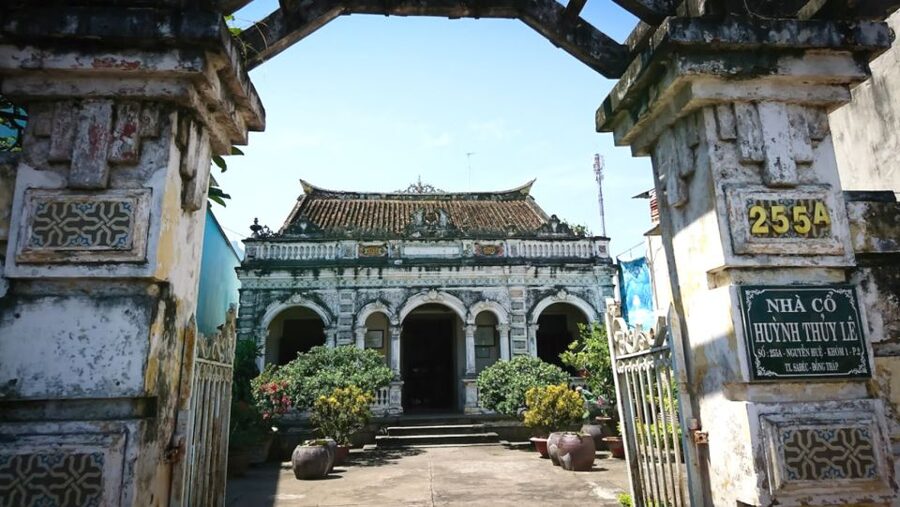
One of the most memorable stops on day one is Huynh Thuy Le Ancient House. This house was built by Huynh Thuy Le’s father and connected to the port merchant world of Sa Dec. The building is mostly wood and shaped like a traditional Southern house, then later reconstructed in 1917 with solid bricks inserted into gaps of wooden pieces.
Here is the key detail: it can look French outside but Chinese inside. The tour frames the visit as tied to a well-known cross-border love story, which is exactly the kind of angle that gives you more than photos. You walk away with a stronger sense of how trade routes, languages, and architecture overlapped in the delta.
Pagoda stops and the giant lotus nia
The day also includes Phuoc Kien Pagoda, which is linked to legends like a crane or a turtle, plus its famous “giant lotus nia.” You also visit La Sen Pagoda for its unique feature, presented as a standout moment on the route.
If you like cultural stops, you will appreciate how the itinerary strings these together without making them feel like random sightseeing chores. If you prefer fewer stops, you may feel this portion is busy, especially in the heat.
Con Lan and Con Phung craft villages
Also on day one, you visit Con Lan and Con Phung for traditional craft village experiences. The tour positions these as craft-focused stops rather than purely scenic breaks.
I like this approach because the Mekong Delta story is not only about water. It is about production, making, and how communities turn natural resources into daily life. Even if you do not plan to buy much, watching traditional techniques can be more satisfying than collecting another set of souvenirs.
Lunch, then into Can Tho
Lunch happens in Sa Dec at a restaurant. After that, you continue to Can Tho, check into the hotel, and have dinner before sleeping overnight.
Can Tho overnight: the underrated part of this tour
This is a rare case where the “just one hotel night” detail matters. Can Tho is the delta capital, and that title is not just marketing. It feels like the place where trade, boat traffic, and daily services connect in a real way.
Staying overnight means you are not doing everything at full speed. You arrive after lunch and multiple stops, so you can manage your energy. Then you get a fresh start for the market day.
It is also the right time to pay attention to your legs. The next day is boat-heavy and early, so you want sleep more than you want another late-night plan.
Cai Rang Floating Market morning, plus what it looks like from the water
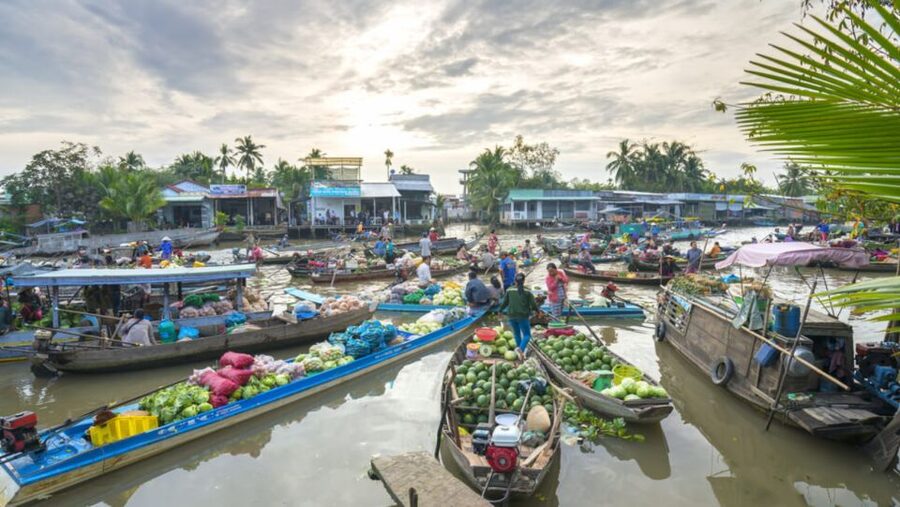
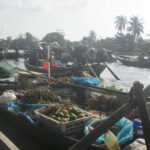
Day two begins with breakfast at 7:00am, then you board a boat for about 40 minutes to reach the first big stop: Cai Rang Floating Market. This market is presented as the largest of its kind in the Mekong Delta.
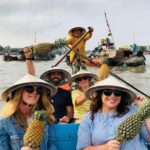
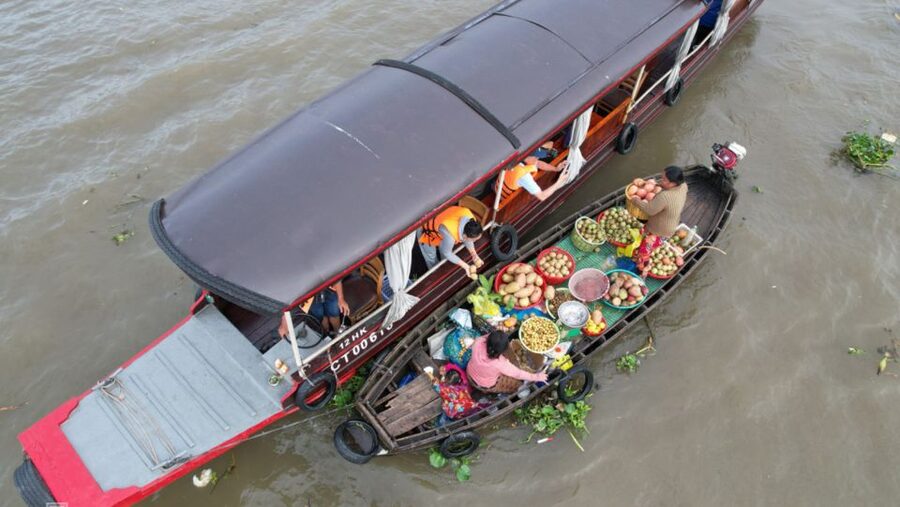
What makes this stop worth the effort is the way it connects boats to food and commerce. During the visit, you may have a chance to board a merchant boat that sells pineapples from Can Tho City. That small detail is the difference between viewing a market from the edge and understanding how goods move.
Even more important, you can spend the market time watching ordinary work patterns. The tour frames it as daily life in the West, which is what helps you see it as a functioning economy rather than a staged show.
If you get motion-sensitive, take it seriously and sit where you feel stable. Boats and water movement are part of the experience here, not something you can avoid.
Factories, Phoenix Island, and Unicorn Island: delta life beyond the market
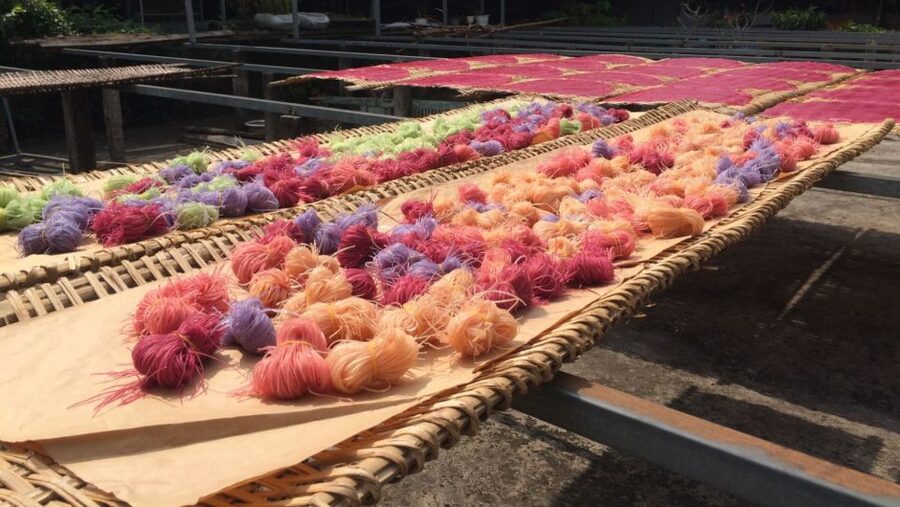
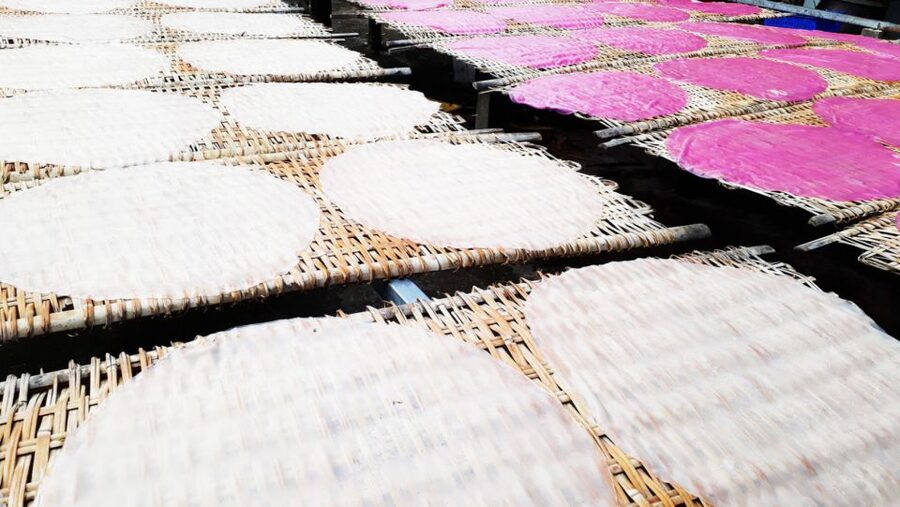
After Cai Rang, the itinerary shifts from selling to making. You visit a noodle and a rice paper factory. These are small stops, but they answer a big question: how does the delta feed people, not just impress tourists?
Then you head to My Tho, where you transfer by boat to Phoenix Island. The tour highlights learning about coconut religion, which sounds unusual, but it fits the delta reality. Coconut is everywhere, and communities often build cultural meaning around what they rely on daily.
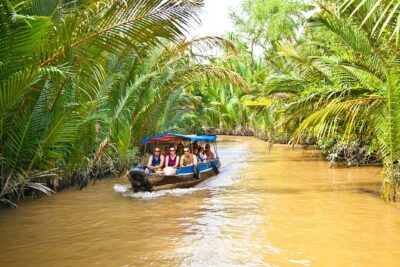
Next is Unicorn Island, visited by wooden motor boat. Along the way, you pass natural creeks, fishermen ports, and stilt houses. This is where the boat route becomes the main show, because you see how waterways shape where people live.
Bee farm honey tea, row boats, and coconut candy villages in Ben Tre
The Ben Tre and My Tho portion leans into tastes and textures.
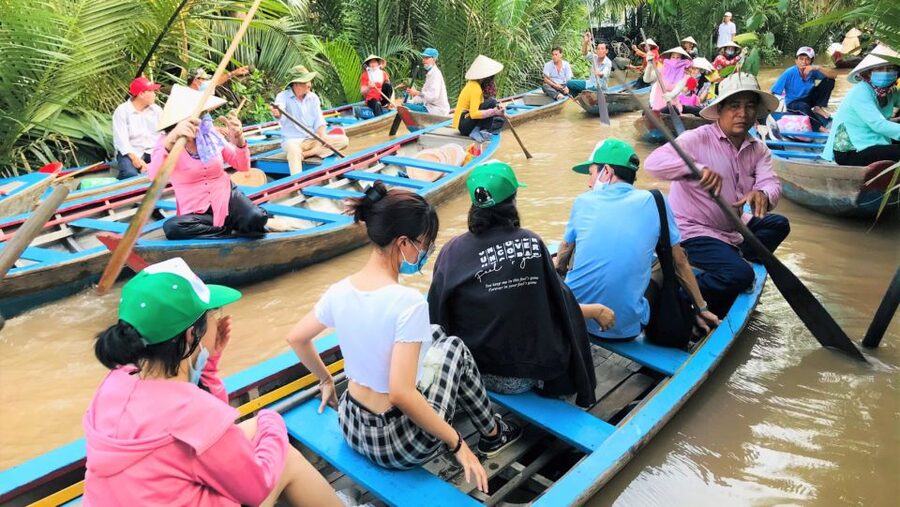
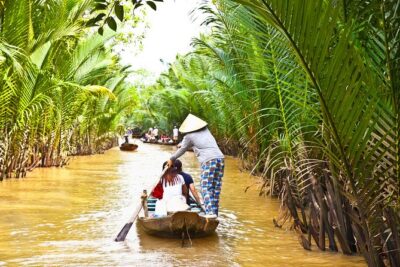
You stop at a bee farm, where you can taste an authentic honey tea. Then you ride a small row boat along canals, with coconut tree scenery and fresh air as the main payoff.
From there, you cruise past seasonal orchards, then to a village where the smell of coconut candies is in the air. You also get to visit small shops making coconut candy and handcrafted items from coconut trees in the Mekong Delta.
This is the part where you should slow down a bit. If you treat it like a checklist, you might miss what makes it special: these are craft and food micro-industries. You are seeing how someone turns a tree product into a snack, then into a livelihood.
Fruits garden and folk music
You also stop at a seasonal fruits garden, where you can enjoy many tropical fruits. The tour adds folk music typical only to Southern Vietnam, which helps round out the senses.
Just remember: early mornings plus heat plus boat time adds up. I recommend you keep a small snack on hand if you are the type who gets hungry between meals, even though the tour includes the listed meals.
Price and value: what you get for $92 to $118
The base price is $92 per person for the 2-star option, with $104 for 3-star and $118 for 4-star hotels. That spread matters because the biggest variable you are paying for is the hotel level in Can Tho, since you get one night included.
What makes the value feel decent is the package nature:
- air-conditioned coach transportation
- English speaking guide
- boat trips in the delta with life jackets
- 2 lunches and 1 dinner plus 1 breakfast
- fruits and honey tea
- entrance fees
- mineral water bottles for two days
For the Mekong Delta, this is often where guided tours can be worth it, because getting between these river towns independently can be time-consuming. The tour saves you planning friction, and it puts you on the water for the market and canal sections.
The tradeoff is time tightness. If you do not like being rushed, you need to accept that the schedule packs in many stops across two days. One caution from real-world experiences: the tour plan can shift at short notice, and sometimes the route gets adjusted in a way that changes which places you reach.
Logistics reality check: heat, pacing, and schedule changes
This route is boat-forward, temple-forward, and factory-forward. That combination is great for coverage, but it can feel intense.
Two specific practical points:
- The Mekong Delta heat can be real, especially with early starts and outdoor market time. Wear breathable clothes and use sunscreen.
- With many transfers, delays can cascade. Some independent experiences describe last-minute changes, including cases where a planned stop was skipped and the day ran faster than expected.
On the brighter side, I’ve seen reports of guides handling changes with calm care. One example includes a guide named Kim, described as empathetic and helpful when the group plan shifted into a smaller, more relaxed arrangement. That is the kind of factor that makes a big difference if you hit schedule turbulence.
Who should book, and who should skip this Mekong Delta tour
This tour is a strong fit if you want:
- a 2-day starter circuit through Sa Dec, Can Tho, My Tho, and Ben Tre
- real Mekong Delta water time at Cai Rang
- craft and food stops, not only temples and photos
- a small group of up to 15 people
It might not be the best fit if you:
- hate tight schedules or moving on before you feel ready
- prefer deeper, unhurried museum-style visits
- want absolute certainty that every named stop will happen exactly as written on your day, with no adjustments
If you are flexible and want a guided taste of the whole region, this is the kind of tour that can work well.
Should you book this 2-day Sa Dec, Can Tho, My Tho, Ben Tre tour?
I’d book it if you want a guided, value-minded route that hits the Mekong Delta’s signature water experiences plus Sa Dec’s craft-and-flower flavor. The combination of an overnight in Can Tho, market time at Cai Rang, and canal and orchard cruising is a good way to get oriented quickly.
I would hesitate only if you are the kind of traveler who needs strict schedule stability. The tour can be adjusted last minute, and that can affect which stops you end up seeing on a given departure.
If you do book, plan to pack light, protect yourself from heat, and give your guide some grace if the river day runs differently than expected.
FAQ
How long is the Mekong Delta tour?
It runs for 2 days.
What time does the tour start from Ho Chi Minh City?
The standard weekly start time is 7:30am.
Is there a hotel included?
Yes, the tour includes 1 night in Can Tho.
What meals are included?
You get 2 lunches, 1 dinner, and 1 breakfast.
What boat activities are included on the itinerary?
You take a boat trip to Cai Rang Floating Market, and you also do boat travel on rivers and canals during the My Tho and Ben Tre portion.
Are life jackets provided on the boats?
Yes, boat trips in the Mekong delta have enough life jackets for everyone.
What is included besides food and transport?
Entrance fees are included, and the tour also includes fruits and honey tea, plus mineral water (2 bottles per person for 2 days).
What languages is the guide?
The live tour guide works in English and Vietnamese.
How big is the group?
The group is limited to 15 participants.
What time do you return to Ho Chi Minh City?
You arrive in Ho Chi Minh City at about 18:00 to 19:00 on day two.
More 2-Day Experiences in Can Tho

More Tours in Can Tho



More Tour Reviews in Can Tho
Not for you? Here's more nearby things to do in Can Tho we have reviewed




Mekong Delta Tours from Saigon, compared.
 ★ 4.5From HCM City: Mekong Delta Tour with Sampan JourneyFrom $1613,132 reviews
 ★ 5.0Cu Chi Tunnels and Mekong Delta Signature TourFrom $337,328 reviews
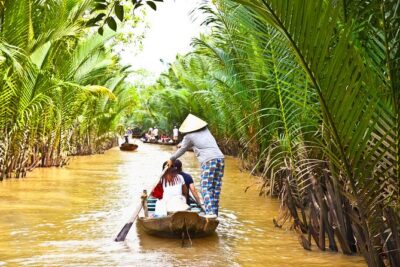 ★ 4.5Mekong Delta Guided Tour from Ho Chi Minh CityFrom $187,192 reviews
 ★ 5.0Cu Chi Tunnels & Mekong Delta Tour with VIP Limousine TransferFrom $567,052 reviews
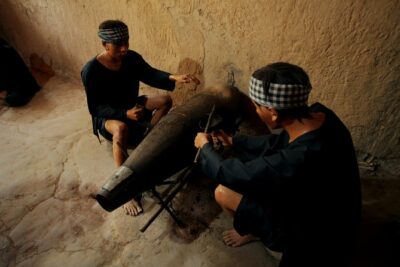 ★ 5.0Cu Chi Tunnels and Mekong Delta Full Day Tour – Max 12From $436,257 reviews
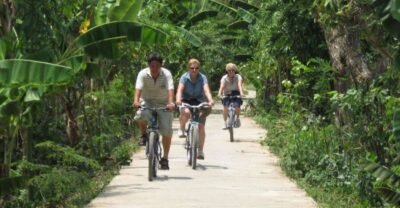 ★ 4.7HCM: Mekong Delta, My Tho & Ben Tre Coconut VillageFrom $163,304 reviews
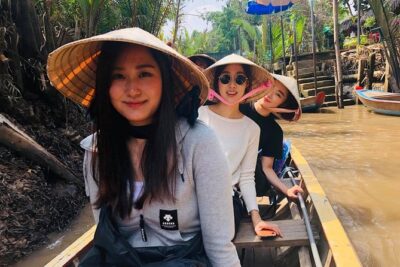 ★ 5.0CuChi Tunnels&Mekong Delta-Boat,TukTuk,Coconut Village SmallGroupFrom $323,113 reviews
 ★ 5.0Adventure Cu Chi Tunnels and Mekong Delta Tour From HCMFrom $292,869 reviews