
Reviewed · SAIGON MOTORBIKE & SCOOTER TOURS
Saigon Historical City Tour On Motorbike – Explore French Quarter
Four hours, and Saigon makes sense fast. This French Quarter motorbike tour gives you a tight, guided path through the places that shaped modern Ho Chi Minh City, from the Reunification Palace to standout French colonial icons. You also get local market time and food stops, so it is not just big buildings on a route.
Two things I especially like are the free hotel pickup and drop-off from District 1, 3, or 5, and the built-in practical safety net. You ride with a helmet, plus accident insurance and the scooter and fuel are handled. In the feedback, the guide name Nathan shows up with praise for being dedicated and very safe behind the wheel.
One consideration: this is a scooter tour, and comfort matters. The rules say kids must be ages 10 and above to ride, and there is no mention of an alternative transport setup, so if you are nervous about motorbike traffic, plan for that reality.
Key highlights worth planning around
- Hotel pickup and drop-off in District 1, 3, and 5 keeps the day efficient
- Open-faced helmet plus accident insurance makes the scooter part feel more controlled
- French colonial “big four” landmarks close together: Notre Dame, Central Post Office, Opera House, and City Hall
- War Remnants Museum is the emotional anchor of the tour, placed where it fits the story
- Jade Emperor Pagoda brings color and symbolism, with a notable link to Barack Obama’s visit
- Food and local markets add real street-life context between the major stops
How The French Quarter Fits Into A Half-Day Motorbike Ride
This is built for people who want a lot of Ho Chi Minh City in a short window. The tour runs about 4 hours, and you can choose a morning or afternoon departure. That means you can still keep your day flexible for other plans, like a longer museum visit later, or a slower dinner after you get the big-picture orientation first.
Because it is a private group tour, your pace can stay human. You are not racing through stops while someone in the next group holds the whole schedule hostage. The route is designed so you hit major landmarks in a logical order, so you start to understand how the city’s political and colonial eras connect.
The logistics are also friendly if you are staying central. Pickup and drop-off are offered from hotels in District 1, 3, or 5 (with some exclusions). If you are based in those districts, that single detail saves time and stress, especially in a city where crossing traffic on your own can be tiring fast.
You can also read our reviews of more city tours in Ho Chi Minh City



Scooter Safety, Helmet, and Insurance: The Practical Stuff That Changes Everything
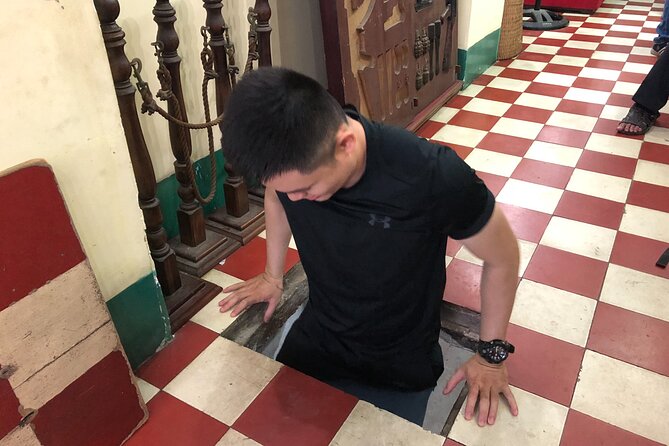
Let’s talk about the part that actually determines how enjoyable the tour feels: getting around safely. You travel by scooter with a helmet, and the kit includes accident insurance. They also provide the motorbike, fuel, and even an optional rain poncho if the weather turns.
You do not have to think about renting a scooter, buying gas, figuring out helmet sizing, or playing insurance roulette. For a tourist day, that is a big deal. The tour is priced at $26 per person, and a lot of that value comes from the “hidden” items you would otherwise pay for separately.
A couple more practical notes matter for planning. Children under 5 must follow their parent during the tour, and kids need to be 10 and above to ride. There is also a weight note: if you weigh over 130 kg, you are asked to contact the operator before booking. If you are traveling with family, these rules are clear enough to help you decide early.
Finally, your guide’s driving style matters. In the feedback, the name Nathan comes up with praise for being dedicated and for driving very safely. That lines up with what you want on a city route where the goal is smooth sightseeing, not stressful navigation.
Starting At Reunification Palace: The Story Before The Buildings

Most tours start with a pretty photo. This one starts with a turning point. Your first major stop is the Reunification Palace. The palace is historically unique, because it served as the headquarters for the old government before the 1970s. Today, it is protected as a special heritage site, and it still holds many monuments and remnants that help you picture the past in real physical spaces.
What I like about leading with this stop is that it gives you a timeline anchor. When you later see French colonial architecture, you start understanding it not as random beauty, but as part of a layered city that changed regimes. It also helps you make sense of why the route later includes the War Remnants Museum, which is not there for fun, but for context.
Practical tip: expect this stop to set the tone emotionally. Even if you are not a history fanatic, you will feel the weight of the place. Go in ready to take it slower than you would in a purely scenic stop.
Notre Dame, Central Post Office, Opera House, and City Hall at Walking Street
After Reunification Palace, the tour stacks several famous landmarks that are physically close and historically connected. You move next to Notre Dame Cathedral and the Saigon Central Post Office, both near the palace area.
Notre Dame Cathedral
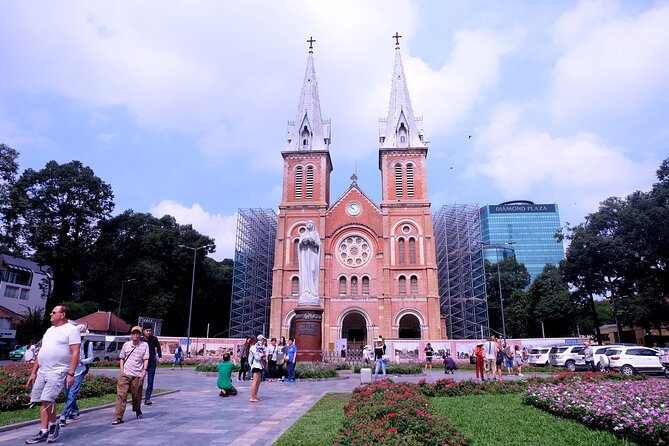
Notre Dame is described as a Gothic-styled French colonial building built from around 1880 to 1886. The cathedral was nominated as a basilica by the Vatican, which is a nice detail if you like tracing how religious buildings were recognized far beyond their local skyline.
Even if you only spend a short time here, it is worth slowing down for the architecture. You are getting the “French imprint” on the city, and it is easy to spot once you focus on the style rather than the crowd.
You can also read our reviews of more historical tours in Ho Chi Minh City






Central Post Office
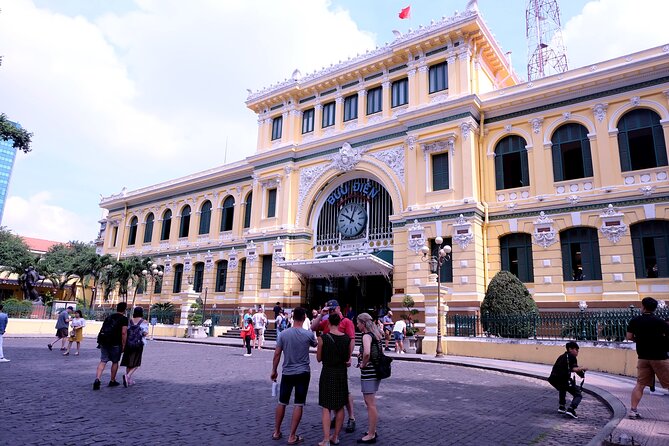
The General Post Office (often called the Central Post Office) is another anchor. It was designed by Gustave Eiffel, the same name that makes many people think instantly of the Eiffel Tower. That detail gives you a strong reason to pay attention, because it is not just a colonial building. It is connected to a specific architectural legacy.
Opera House and City Hall
The route then continues to see the Opera House and the City Hall area. City Hall sits at the end of the beautiful Walking Street, which the tour lists as a must-visit spot in Saigon today.
This is a good stretch of the day for anyone who wants a “greatest hits” view, but with guidance that helps you connect why each building mattered. Just remember, this part mixes scooter time with walking. Wear shoes that are comfortable, because you are going to step around to actually see the facades up close.
The War Remnants Museum: Why It Belongs in This Order
The tour takes you to the War Remnants Museum, described as a place that highlights the sad time in Vietnam’s history. It is also framed as an opportunity to set your perspective on where the country has come from and where it is heading.
This stop is the emotional center of the itinerary. Even if you only know a few basic facts, the museum is the kind of place where you start to understand the human cost behind political headlines. It is not presented as a casual photo stop, and it should not feel casual.
How to get the most from it: give yourself a respectful pace. If you rush through, you miss the point. If you slow down and really look, the experience tends to stick longer, and it changes how you view everything else you see that day.
Thich Quang Duc Statue and How Protest Is Remembered
One of the highlighted items is the Thich Quang Duc statue, connected to his self-immolation against what is described as the draconian policy of the South Vietnam Government. This detail matters because it shows another side of history, the side of protest and public conscience.
Even though you might only see a statue as a quick roadside moment, it acts like a bridge. It connects the political events in the Reunification Palace era to the larger story you will meet again at the museum. It is also a reminder that history is not only built in palaces and official buildings. People shaped it with actions that were meant to be seen.
Jade Emperor Pagoda, Color, Statues, and the Barack Obama Connection

The last major religious stop is the Jade Emperor Pagoda. This temple is described as one of the most spectacularly colorful in Saigon, dedicated to the King of Heaven. It is also noted for its exquisite statues, with a feeling of the almost phantasmal.
If you want variety in the day, this stop is it. After heavy historical and war-related content, the Jade Emperor Pagoda brings a different kind of attention. You shift from political timelines to symbolism, art, and ritual space. You also get a change in atmosphere that helps the tour end on a more balanced note.
The tour information also includes an interesting detail: the Jade Emperor Pagoda is where Barack Obama visited. Even if you are not chasing celebrity trivia, it signals that this temple is recognized internationally. That can make your visit feel more meaningful, especially if you like knowing that the places you are seeing are on the radar of people beyond Vietnam.
Local Markets and Food Stops: The Part That Makes It Feel Like Saigon
Between the big landmarks and temples, you get time to see busy local markets and sample food and drinks along the way. The tour description calls out delicious food, and this is one of the reasons scooter tours can work so well for first-time visitors.
Buildings teach you structure. Markets teach you rhythm. Food stops teach you daily life. Put together, you get a fuller sense of what the city feels like, not just what it used to be.
There is not a list of specific dishes in the provided info, so focus on the bigger benefit: you are tasting and eating as part of the route, which usually means more authentic choices than a standard sit-down restaurant between monuments.
Price and Value: Why $26 Can Work If You Use the Inclusions
At $26 per person for about 4 hours, the price sounds easy to dismiss. But here is the value logic I see in what’s included.
You get:
- Free hotel pickup and drop-off in District 1, 3, or 5
- Scooter and fuel
- A high quality open-faced helmet
- All food and drinks
- Rain poncho if needed
- A friendly, professional guide
- Accident insurance
When a tour includes transport, meals, and safety coverage, you are often paying for those things anyway. Even if you planned to do some landmarks by yourself, you would still face time costs and the hassle factor. This tour removes a lot of that friction.
Not included is tips and personal expenses, which is normal. The smart move is to budget a little extra for gratuities and any souvenirs you might want after seeing the city up close.
Who This Tour Is Best For (And Who Should Skip the Scooter Part)
I think this tour fits best if you want three things at once: a guided landmark route, a strong historical storyline, and practical city transport that gets you around without endless planning.
You are likely to enjoy it if you:
- Have limited time and want the major Ho Chi Minh City highlights
- Like French colonial architecture plus the city’s modern political history
- Are comfortable riding a scooter with a helmet and insurance coverage
- Want the convenience of hotel pickup and drop-off
You might want to choose something else if you:
- Are uncomfortable with motorbike travel in traffic
- Need a tour designed around mobility or non-scooter transport (nothing like that is mentioned here)
- Are traveling with kids under the riding age requirements, since the tour clearly sets expectations for who can ride
The Bottom Line: Should You Book This Saigon Historical City Tour?
If you want a half-day way to get your bearings fast, this is a strong pick. The route mixes political history, French colonial icons, and spiritual color, then lands you with food and market time so the day feels real, not staged.
I would book it if you are comfortable on a scooter, you are staying in District 1, 3, or 5, and you like the idea of a guide who can connect the sites into one story. I would skip it if you know you will feel anxious on a scooter, because this experience is built around that.
Overall, the value looks solid for the inclusions, and the route structure makes it a smart first or second day in town.
FAQ
How long is the Saigon Historical City Tour by motorbike?
The tour is about 4 hours.
What is the price per person?
The price is $26.00 per person.
Does the tour include hotel pickup and drop-off?
Yes. Free hotel pick-up and drop-off is offered for hotels in District 1, 3, and 5 (with some exclusions).
Is a scooter and helmet included?
Yes. The tour includes a motorbike, an open-faced helmet, and also covers fuel. Accident insurance is included too.
What are the age rules for children?
Children under 5 must follow their parent during the tour. To ride on the motorbike, children must be ages 10 and above.
What is included in the tour price?
The tour includes all food and drinks, motorbike and fuel, helmet, rain poncho (if needed), friendly professional guides, and accident insurance.
What is the cancellation policy?
You can cancel for a full refund up to 24 hours in advance of the experience start time. If you cancel less than 24 hours before, the amount you paid is not refunded.
More City Tours in Ho Chi Minh City



More Tours in Ho Chi Minh City


More Tour Reviews in Ho Chi Minh City
Not for you? Here's more nearby things to do in Ho Chi Minh City we have reviewed








Saigon Motorbike & Scooter Tours, compared.
 ★ 5.0Ho Chi Minh City Street Food Tour & Sightseeing By MotorbikeFrom $289,413 reviews
 ★ 5.0Saigon By Night and Street Food By Motorbike | Opt: Ao Dai RidersFrom $374,066 reviews
 ★ 5.0Private Street Food Tour by Motorbike/Car with Local StudentsFrom $453,950 reviews
 ★ 5.0Top Notch Street Food Motorbike Tour In Ho Chi Minh CityFrom $292,667 reviews
 ★ 5.0Private Street Food Motorbike Tour in Ho Chi Minh CityFrom $552,180 reviews
 ★ 5.0Ho Chi Minh City Motorbike Tour with Student | Saigon AdventureFrom $231,697 reviews
 ★ 5.0Afternoon Saigon Unseen Adventure by Scooter |Opt: Ao Dai RidersFrom $251,282 reviews
 ★ 5.0Ho Chi Minh Night Tour by Motorbikes with Female Rider | KissTourFrom $391,187 reviews
Browse the lists this tour appears in