
Reviewed · HISTORICAL TOURS
Saigon US Army Jeep Tours: History, Culture & Street Food
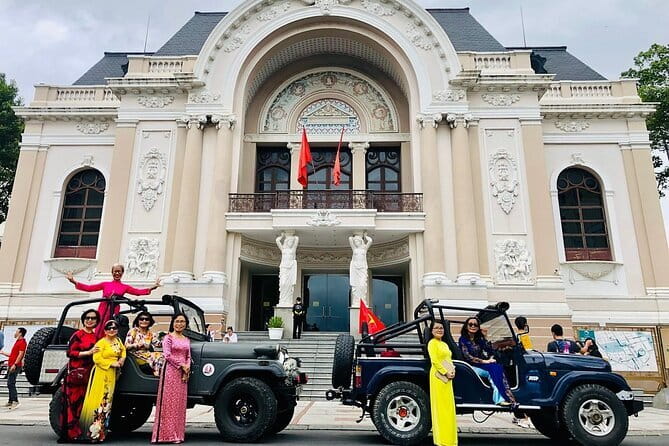
Saigon by Jeep feels like time travel. You start at Independence Palace, then hop through French colonial landmarks, temples, and hard-hitting museum exhibits, all with a guide who ties the stops together. I love the combination of big historical anchors like the War Remnants Museum plus calmer cultural pauses like the Jade Emperor Pagoda. The other win is the street-photo route in District 1 and 2, where the open-air ride makes the city feel close. One thing to consider is that a couple of famous viewpoints are listed as drive-by photo stops, so you should set expectations before you go.
You also get the practical stuff right: cold bottled water, a private setup for your group, and English-language guiding (with a stated surcharge if you need a non-English option). I like that the tour is built as a clear 4-hour loop with included admission for multiple stops, so you are not guessing what is worth your time. The main drawback is occasional timing and logistics hiccups, like delays at pickup or slight plan adjustments if a site has access limits.
Key highlights you will actually feel on the ride
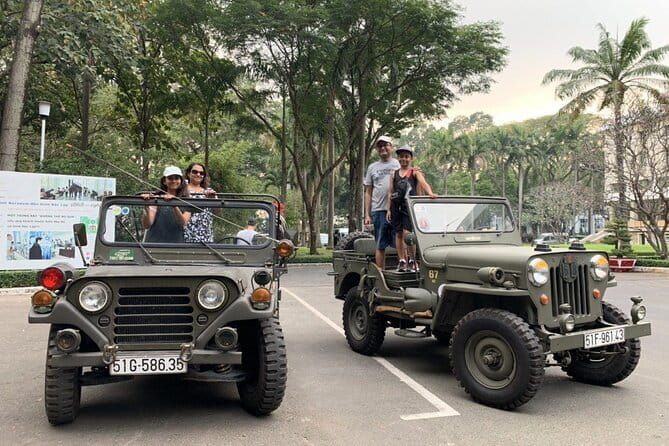
- Open-air US Army Jeep makes photos and street views easy
- English-speaking guides like Luc and Khoa focus on history you can follow
- Four hours, many locations across District 1 and 2 without the hassle of transfers
- Strong contrast: War Remnants Museum, then pagodas and Chinatown temples
- Craft stop at Phuong Nam Lacquerware shows real Vietnamese workmanship
- Some big sights are photo stops, like Bitexco Financial Tower, not admissions
Jeep history in Ho Chi Minh City, the fast and fun way

Ho Chi Minh City can be a lot, mostly because it moves fast and the streets keep changing names and moods. This Jeep tour gives you a structure. You get a ride that is part transportation, part rolling sightseeing platform, and part history lesson with stops spaced so you can breathe, not just bounce.
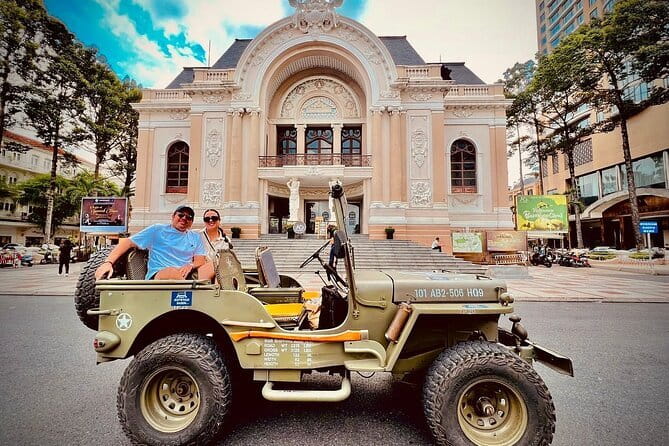
The Jeep choice matters. An open-air vehicle is great for two reasons. First, your sightlines stay wide, so you actually notice architecture and street life as you pass. Second, for photos, the angles are often better than standing in a crowd and hoping the right person moves.
I also like that the tour keeps the balance. You are not stuck in only museums or only temples. The route mixes Vietnam War context, French colonial-era landmarks, spiritual spaces, and a craft workshop, so you leave with a more complete sense of how Saigon works today.
You can also read our reviews of more food & drink experiences in Ho Chi Minh City


Price and value: what $69 buys you in four hours
At $69 per person for about 4 hours, this is not a budget-only experience. But it can be good value if you care about efficiency and guiding, not just driving past things.
Here is what you are paying for that you would struggle to assemble on your own:
- A private American US Army Jeep
- A professional English-speaking guide
- Cold bottled water
- Admission tickets included for multiple listed stops (with one important note below)
One note that can affect value: the tour lists entrance fees as included, but also says entrance fees are not applied for the group option. In other words, your exact cost coverage depends on how you book. If you want the simplest, check that the version you book includes admissions for the specific sites on the itinerary.
Also consider the built-in time-saving. Instead of piecing together multiple grab-a-car trips, you get one guided route that covers major landmarks and districts. For first-timers, that can be worth real money because it reduces decision fatigue.
Where you start, how pickup works, and how to plan your time
The tour starts at Saigon Port Maritime Service Center, 5 Đ. Nguyễn Tất Thành, Phường 12, Quận 4. The good part is that the activity ends back at the meeting point, so you do not get dropped into an area you did not plan for.
Pickup is listed as offered, and that can make a big difference if you are staying in District 1. Still, I would plan as if you might need to get to the meeting area. One of the most serious practical complaints in the feedback is timing, with at least one case where the start ran about an hour late. The lesson for you is simple: build a buffer in your day. Do not book anything tight right after this tour.
If you want this to run smoothly, aim to be ready early. Also keep your phone handy in case the guide calls or texts. You are on an urban route with traffic, and the tour is designed to cover a lot.
Independence Palace, then the Central Post Office: two eras in one morning feel
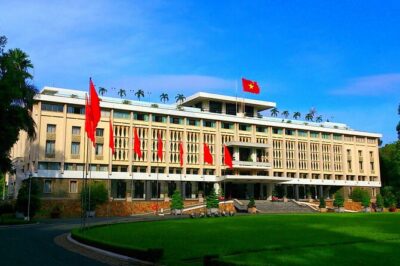
Your first major anchor is Independence Palace, also called Reunification Palace. It is positioned in the heart of Saigon and is presented as a symbol of Vietnam’s turbulent history and resilient spirit. The stop includes 45 minutes and an admission ticket.
Why this matters for your experience: starting here gives you a mental map for everything that comes later. When you later see War Remnants Museum exhibits, former US embassy context, and other war-era traces, the timeline clicks faster.
Next up is Saigon Central Post Office, a landmark known for its French colonial and Gothic influences. The tour allocates 15 minutes with an admission ticket included.
This is the kind of stop where you either rush past details, or you take the time to look up and around. If you like architecture, go slow at the front hall and scan the building’s shapes. If you do not, the quick visit still works because it gives you a readable contrast to the more political first stop.
Possible drawback to consider: with multiple major stops close together, you should expect some brief transitions. If you want slow travel, plan to come back on another day for a deeper wander.
Jade Emperor Pagoda: the calm break that changes your pace

Then the tour shifts tone with Emperor Jade Pagoda (Chua Ngoc Hoang). It is a Taoist temple built in 1909 and dedicated to the Jade Emperor. You get 20 minutes with admission included.
I like this stop because it resets your senses. After political history and war context, you get intricate carvings, an active spiritual atmosphere, and a different kind of Vietnamese storytelling. Even if you are not religious, the visuals and the social rhythm of the space are usually compelling.
Practical note: temples often have rules around covering shoulders or shoes. The tour includes time, but you can still get slowed down if you need to adjust your clothing.
More Saigon tours, river trips, tunnel visits, and city experiences to compare




War Remnants Museum, the former US embassy site area, and Ba Son Bridge context
The biggest emotional stop is War Remnants Museum, with 40 minutes and admission included. It is presented as a profound journey through Vietnam’s turbulent history, established in 1975 with powerful exhibits about the impact of the war.
If you only do one museum in the city, this is a strong contender. It gives context without requiring you to connect the dots alone. For many people, the museum is the part they remember most because it confronts what history looked like on the ground.
The route also passes by the former US Embassy site area, listed as a significant historical location from the Vietnam War era. The tour positions this as a context stop, not a long sit-down visit.
After that, you travel through parts of the city where modern infrastructure frames the past. Ba Son Bridge, also referred to as Thu Thiem 2 Bridge, is listed as connecting District 1 with the Thu Thiem New Urban Area in District 2. You will mostly see it as part of the drive and photo logic, but it helps explain how Saigon layers new growth over older stories.
This is a lot of heavy context in one half-day. If you are sensitive to war imagery, pace yourself. Take a breather during transitions, and do not feel pressured to read every label perfectly.
Phuong Nam Lacquerware: craft you can touch with your eyes

Next the tour shifts to hands-on creativity at Phuong Nam Lacquerware (Phuongnam Lacquerware). You get about 30 minutes, with admission included.
This stop is where the tour becomes more than a history route. Lacquerware is part of everyday Vietnamese life, and seeing the craftsmanship up close helps you understand why cultural heritage survives beyond monuments.
What makes this useful for you: even if you do not buy anything, you come away with a clearer sense of process. You also get a break from museums and street walking. It is a different pace, and it often feels more personal than an exhibit.
Tip for decision-making: if you plan to purchase, budget extra time for questions and comparisons. If you do not plan to buy, still look carefully at the details. The value here is learning to see what makes Vietnamese lacquerwork distinct.
The Secret Weapon Cellar and Ba Thien Hau Temple in Cholon
One of the more surprising stops is Hầm Vũ Khí Bí Mật Secret Weapon Cellar of the Saigon Rangers. It is described as a hidden Vietnam War-era site in a narrow alley of District 3, with 20 minutes and admission included.
Why it works on this tour: it adds texture. Big museums are one thing, but a smaller, tucked-away space can feel closer and more specific. Even with a short visit, it gives you a different angle on the war.
Then you head toward spiritual and cultural contrast with Ba Thien Hau Temple (Thien Hau Pagoda) in Cholon (Chinatown). The tour gives you 30 minutes, admission included. It is presented as one of the oldest Chinese temples in Ho Chi Minh City, built around 1760 by the Cantonese congregation.
If you want a city that feels layered, this is a great ingredient. Cholon’s vibe is different from District 1. Temples here reflect that neighborhood identity. The stop also balances the heavier war theme with something calmer, even if it is still lively.
Nguyen Hue, Dong Khoi, Opera House, Rex Hotel, People’s Committee, and Bitexco
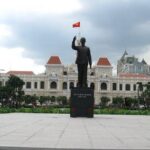
Between the ticketed stops, you do a smart street-photo loop. The tour includes photo stops along Nguyen Hue Street and Dong Khoi Street, plus sights around the Saigon Opera House and the Rex Hotel area. It also passes the Saigon People’s Committee building and the Ba Son Bridge mentioned earlier.
You should think of these as photo and orientation moments. They help you learn the city’s layout fast. Nguyen Hue is a central artery. Dong Khoi feels more historic. The Opera House and People’s Committee building bring back the French colonial and administrative imagery that shaped District 1.
About Bitexco Financial Tower: one piece of advice based on how the tour is commonly run is to treat it as a drive-by photo stop, not an entry ticket stop. If you want to go inside, plan that separately.
How the open-air jeep affects your photos and comfort
This is a photo-friendly tour for a reason. The US Army Jeep setup means you can shoot at street level while moving. That gives a different look from standing on the sidewalk.
For your comfort:
- Wear something breathable for the open-air ride.
- Bring a small layer if it gets windy or cool later in the day.
- Keep your hands and phone secure while taking photos.
Also, you will likely make multiple stops where you stand, then get back in the Jeep, then move again. If you have mobility limits, this is still manageable for many people, but you should expect short walks and curb steps.
Guide quality makes a real difference, and you can plan around it
The tour repeatedly highlights the role of the guide. In the best runs, guides like Luc, Khoa, and Jerry are described as energetic, professional, and able to explain the history clearly. That matters because this tour is not only about seeing places, it is about understanding why those places matter.
One caution from the feedback is inconsistent guide behavior. In a worst-case experience, a guide reportedly stayed on a phone and provided little information. That is not something you can predict, so your best move is to communicate early. If you care about history, set the tone at the start by asking what you will cover and how long you will spend at each stop.
Language also matters. The tour includes English-speaking guidance by default, but it lists a $50 USD cash surcharge for non-English-speaking guides. If you want the history layer to land, do not book a language option that does not match your needs.
Finally, note the seasonal pricing rule: there is a 35% extra charge fee applied for Lunar New Year, from the last day of the old Lunar year until the 4th day of Lunar New Year.
Should you book this Jeep tour or choose something else?
I recommend this tour if you want a fast, memorable way to cover the big essentials in Ho Chi Minh City, especially if you like history but still want a fun ride. The combination of Independence Palace, War Remnants Museum, pagodas, a craft stop at Phuong Nam Lacquerware, and the hidden wartime Secret Weapon Cellar gives your half-day a strong shape.
You might skip it if you want a slow, unstructured day, or if you specifically need certain attractions with guaranteed time inside. The route includes major photo stops like Bitexco Financial Tower drive-by viewing, and the schedule can shift with logistics.
My simple decision rule: book it if you want a guided route that helps you read Saigon quickly, and book separate add-ons on another day if you want deep museum time or shopping time.
FAQ
How long is the Saigon US Army Jeep tour?
It runs for about 4 hours.
Where does the tour start and end?
It starts at Saigon Port Maritime Service Center, 5 Đ. Nguyễn Tất Thành, Phường 12, Quận 4, Ho Chi Minh City, and ends back at the same meeting point.
Is pickup included?
Pickup is offered, and the tour also has a listed meeting point at Saigon Port Maritime Service Center.
What is included in the price?
The tour includes a private American US Army Jeep, a professional English-speaking guide, cold bottled water, and entrance fees as listed for the itinerary (with a note that entrance fees are not applied for the group option).
Are there any extra charges?
Yes. A $50 USD cash surcharge may apply for non-English-speaking guides, and a 35% extra charge fee applies during the Lunar New Year period.
Is the tour private?
Yes, it is a private tour, and only your group participates.
Can I cancel for a full refund?
Free cancellation is available up to 24 hours in advance for a full refund. If you cancel less than 24 hours before the start time, the amount paid is not refunded.
More Food & Drink Experiences in Ho Chi Minh City
More Tours in Ho Chi Minh City




More Tour Reviews in Ho Chi Minh City
Not for you? Here's more nearby things to do in Ho Chi Minh City we have reviewed




Historical Tours, compared.
 ★ 5.0From Ho Chi Minh: Cu Chi Tunnels Half-Day History Tour with GuideFrom $14480 reviews
 ★ 5.0Saigon Afternoon City Historical Scooter Tour |Opt: Ao Dai RidersFrom $25466 reviews
 ★ 5.0Saigon Unseen, History, & Hidden Gems Sightseeing Motorbike TourFrom $33416 reviews
 ★ 5.0Saigon Morning City Historical Scooter Tour w Ao Dai Rider optionFrom $25349 reviews
 ★ 5.06 Hours Historical Tour in Cu Chi Tunnel with Free SnackFrom $19312 reviews
 ★ 5.0Vung Tau Essential: Beach, Christ Statue & Colonial HeritageFrom $41284 reviews
 ★ 5.0Full-Day Ho Chi Minh City Tour with Colonial Heritage & ChinatownFrom $47246 reviews
 ★ 5.0Saigon Historical City TourFrom $45139 reviews
Browse the lists this tour appears in