Reviewed · SAIGON
Three Coolest Neighborhoods in Saigon
Saigon gets more interesting when you leave District 1. This walking tour links everyday life in District 4 and Chợ Lớn with Vietnam War history at the Burning Monk site. I especially like how you taste real stuff, fresh fruit, Vietnamese coffee, and herbal tea. I also like the small-group feel, capped at 8 people, so questions do not get lost. One drawback to plan for: it is a solid walk, about 5.5 to 6 km, and you will be on your feet for roughly four hours.
The route is built to answer a simple question: what makes Saigon, Saigon. You start at 36 Hồ Tùng Mậu in District 1, then move outward to places most first-timers never wander into on their own. Along the way, you get a clear picture of how locals shop, snack, worship, and remember.
Key highlights worth knowing before you go

- Xom Chieu Market alleys in District 4, with a real sense of how people live up close
- Chợ Lớn Chinatown food streets, including Aquarium Street and Herbal Medicine Street
- A colorful Chinese-style Buddhist temple and a herbal-tea stop that fits the street theme
- The Venerable Thích Quang Đức Monument area, tied to the Burning Monk site
- Commandos Safe House, including the secret weapon cellar details
Saigon outside the postcard zone: how this walk actually works
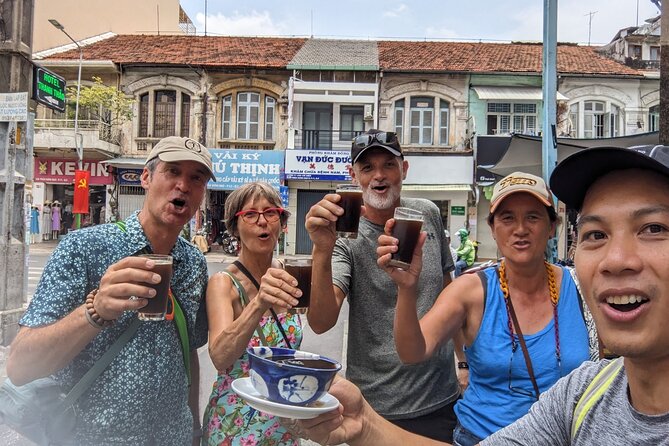
This tour is designed around one smart idea: don’t just look at Saigon, learn how it functions. The walking loop nudges you out of the main tourist orbit and into neighborhoods where daily routines are the main attraction. If you like travel that feels practical, not performative, this format is a good match.
The structure is also easy to follow. You are never stuck for long without context. Your guide walks you through what you are seeing, then gives you a reason it matters. That is how markets stop being chaos and start becoming a living map.
Practical note: the total walk is 5.5 to 6 km. The itinerary is paced with breaks built into each stop, but you still need comfortable shoes. If you wear “pretty but painful” footwear, you will feel it by stop two.
Group size is small. With a maximum of 8 travelers, you are more likely to hear the explanations clearly, and the guide can steer the pace for the group.
You can also read our reviews of more tours and experiences in Ho Chi Minh City.



Stop 1, Xom Chieu Market in District 4: alleys, local shopping, real pace
You begin at 36 Hồ Tùng Mậu in Bến Nghé, Quận 1, and then spend about 1.5 hours around Xom Chieu Market. The first leg includes a 3 km walk through the tight lanes of District 4, where daily life looks different from the wide boulevards you might expect in a big city.
This is where the tour gives you something you cannot easily replicate solo. Market areas like this can feel overwhelming when you show up without a plan. But on this walk, you get to see the small alleys as a system: where people funnel in, what types of stalls show up where, and how the market connects to the neighborhood around it.
One of the tour highlights calls out the maze of alleys in the Mafia District area. Even if you have never heard the nickname before, the point is less about crime stories and more about the street layout. In places like this, the “maze” is part of how the neighborhood works. It shapes what people can carry, how they meet, and how businesses cluster.
What I like here for first-timers: the tour keeps you grounded in the everyday. You are not just taking photos of storefronts. You are learning what people actually do when they wake up and go out to buy what they need.
What you should watch for: markets can be visually intense. If you are sensitive to crowds or want quiet sightseeing, this is not a slow, museum-style stroll. The payoff is the authenticity, but you should be mentally ready for close-up street energy.
A snack-and-drink tour disguised as a history tour: fruit, Vietnamese coffee, herbal tea
A big chunk of the value comes from food and drink that matches the route. This is not random “we stop for coffee.” You taste things tied to where you are.
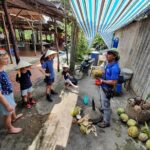
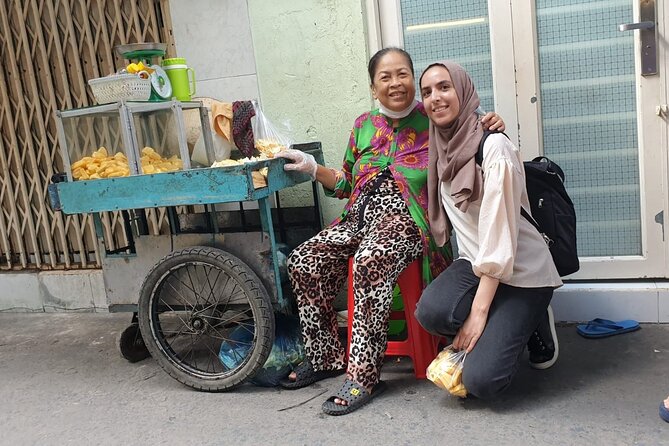
From the market, you get fresh seasonal fruits. That matters more than it sounds. Fruit at street level is a window into supply, seasonality, and local tastes. Even if you think you already know Vietnamese fruit, you might be surprised by what is in season when you are there.
Then come the two signature sips. You try Vietnamese coffee, which is a distinct style, and you also try herbal tea later at the herbal-focused part of the route. The herbal stop is especially useful because it keeps you from treating the street as just scenery. You learn how herbal products show up in everyday life, not only as a cultural side note.
If you are the type who plans a trip by “what can I eat here,” you will probably rate this tour highly. The food pauses are short enough to keep the walk moving, but they still give your brain a reset.
Stop 2, Chợ Lớn Chinatown in Quận 5: Aquarium Street, Herbal Medicine Street, and temple colors
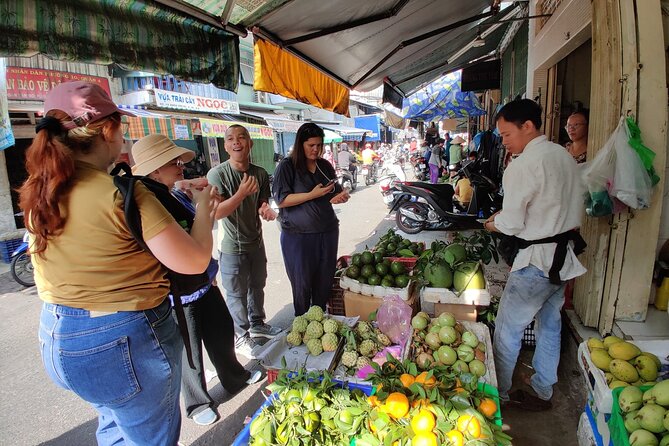
After District 4, you head to Chợ Lớn in Quận 5 for about one hour at this area. The walk length here is around 1.5 km, moving through Chinatown with a focused theme: streets named for what you find there.
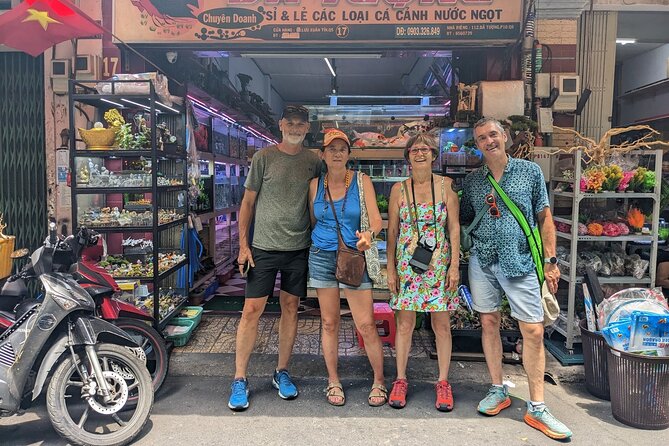
You go toward Aquarium Street and Herbal Medicine Street, which sounds oddly specific until you see the clustering in real life. When a street has an identity like that, it means businesses specialize, customers know where to go, and the neighborhood functions like a shopping network.
You also visit a colorful Chinese-style Buddhist temple. This is not just a quick exterior look. The tour gives you enough context to understand the cultural flavor of the place, and why it fits the surrounding commercial streets. In many cities, religion and local commerce sit side by side. Here, it is visible in the details and in the rhythm of the street.
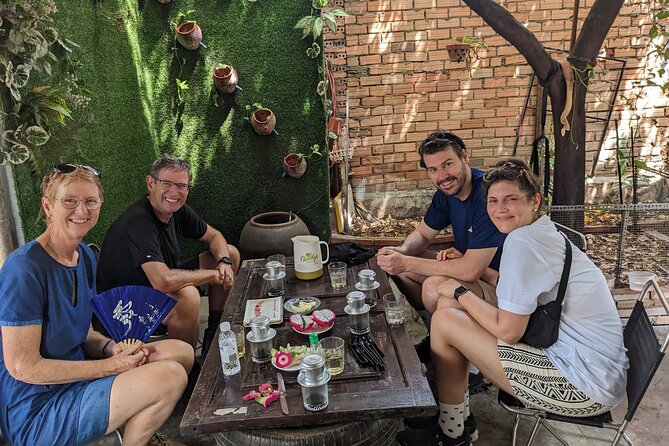
The herbal-tea shop ties everything together. You taste the drink directly connected to the herbal theme you just walked through. That is one of the smartest tour choices because it prevents the herbal section from feeling like a photo stop only.
What might be a drawback for some: Chinatown streets can get crowded and narrow in spots, so you need patience when walking close to shopfronts. Also, if you do not like strong smells, the herbal area may be intense. It is part of the experience, but it helps to know it is coming.
Stop 3, Thích Quang Đức Monument area: Burning Monk context and the Commando Safe House
The last portion shifts gears. You walk about 1 km to the Venerable Thích Quang Đức Monument area, spending about one hour on Vietnam War context. This stop is where the tour asks a bigger question: what did the war do to daily life, belief, and memory?
The tour specifically points you to the Burning Monk site and the Commando Safe House. You learn through the lens of the moment, the symbolism, and the way stories are preserved in place. The guide explanation helps you connect the sites to a wider understanding of conflict and ideology, without turning it into a textbook lecture.
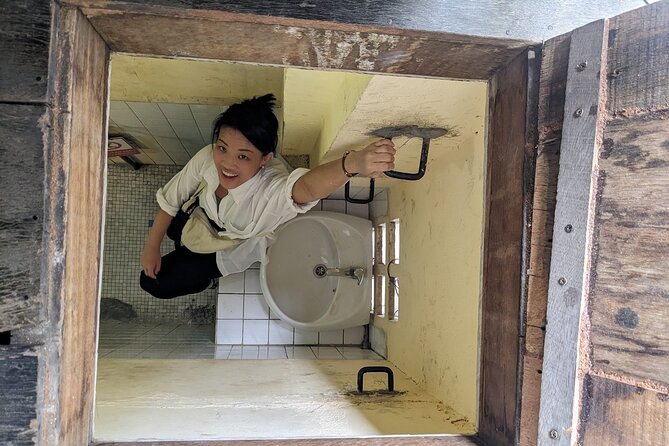
One very concrete detail is the “secret weapon cellar” at the Commando Safe House. That kind of specific stop makes history feel less abstract. Instead of only hearing names and dates, you are shown the physical setting that carried risk and secrecy.
Why this part is valuable: a city’s neighborhoods tell you what people value today, and memorial sites tell you what people never want to forget. Combining both in one tour makes Saigon feel whole, not just pretty.
A consideration: this section is heavier than the market and Chinatown parts. If you prefer light sightseeing only, plan a calm mindset here. It is still educational, but it lands with emotion.


The guides, the visuals, and why small groups matter
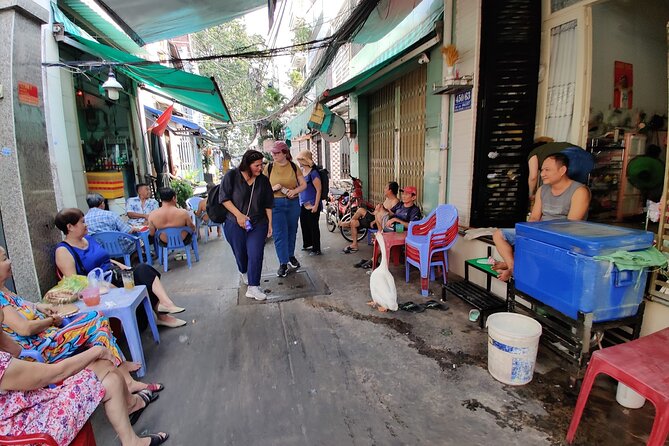
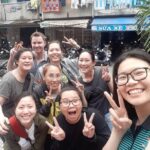
Your success on this tour depends a lot on the guide. Reviews for this tour consistently highlight that the guides are engaging and prepared with visuals to support explanations. One guide named Kyle is mentioned as especially supportive and warm, and another guide named Danny also comes up in positive feedback. That matters because history and cultural meaning are easier to grasp when you can see what the guide is describing.
In small-group format, the guide can also manage the pacing better. You are not just following a leader at the front. With a maximum of 8 travelers, you are more likely to hear answers to your questions, including ones that come up as you notice something unusual on a street.
If you like tours where you feel you are walking with a knowledgeable local friend, this is that style.
Price and value: what $37.59 buys you in real terms
At about $37.59 per person, this is not expensive for a half-day walking experience that includes multiple tastings and paid entry where it counts.
Here is what is included in the core experience:
- English-speaking tour guide
- Snacks: fresh seasonal fruits from the market
- Coffee and/or tea: Vietnamese coffee and herbal tea
- All fees and taxes
- Admission included for the Vietnam War portion of the route
That combination is where the value is hiding. Many “city walks” give you a guide but cut the tastings, or they add tastings but skip the contextual sites. This tour does both. You also get free admission noted for the market and Chinatown stops, and admission included for the final monument-area segment.
If you are comparing value, think in terms of what you would otherwise pay on your own. You would likely spend on a guide anyway if you want meaning, then add multiple food stops and probably one or more paid entrances for history sites. Here, those pieces are bundled into one organized route.
The main thing you should budget separately is personal spending and optional tipping. Pick-up and drop-off are not included, so plan to start near the meeting point in District 1 and make your own way to the end in District 3.
Timing, walking pace, and what to wear
The tour starts at 8:30 am and runs about 4 hours. You are walking roughly 5.5 to 6 km total. That is very doable for most people, especially with short pauses at each stop.
Still, you should dress for walking in Vietnam. I recommend comfortable, broken-in shoes with grip. If it is humid, you will sweat. That is normal. Bring water if you feel you need it, but the tour itself already covers fruit and drinks, so you are not totally exposed to a dry itinerary.
One more practical detail: the route is marked as near public transportation. That helps if you want to come early, grab coffee near the meeting point, or handle your own commute back after the tour.
The tour ends in District 3, near the city center, and the endpoint is listed around Võ Văn Tần and Võ Thị Sáu. It is a convenient place to continue your day on your own.
Who this tour is best for
This works especially well if:
- You are a first-time visitor who wants to understand neighborhoods, not just landmarks
- You like food stops that make sense for the area you are walking through
- You want a Vietnam War lesson grounded in specific sites, not just general facts
- You prefer small groups, capped at 8 travelers, for better guide interaction
It may be less ideal if:
- You want a low-effort tour with minimal walking
- You prefer only light, cheerful sightseeing
- You do not want to mix markets and temples with heavier historical context
If you want your day to feel balanced, with street life in the morning and history at the end, this route is a solid fit.
Should you book Three Coolest Neighborhoods in Saigon?
I think you should book this tour if you want Saigon to click. The mix of District 4 market alleys, Chợ Lớn Chinatown street specialties, and the Thích Quang Đức Monument plus Commando Safe House area makes it hard to mistake this for a generic checklist. You get guided explanations, included tastings, and admission where it matters.
Skip it only if your plan is built around minimal walking or you want to avoid the heavier war-related stop. Otherwise, for the price, the added meals and structured context are what make it feel worth your time.
If you are in Saigon for a few days and you want one tour that connects culture, daily life, and memory in a single half-day, this is a strong choice.
FAQ
What is the tour duration?
The tour lasts about 4 hours.
How much walking is involved?
You should expect a walk of about 5.5 to 6 km total.
What time does the tour start?
The start time is 8:30 am.
Where do I meet and where does it end?
You start at 36 Hồ Tùng Mậu, Bến Nghé, Quận 1. The tour ends in District 3 near Võ Văn Tần and Võ Thị Sáu.
What is included in the price?
The tour includes an English-speaking tour guide, snacks (fresh seasonal fruits), Vietnamese coffee and/or herbal tea, and all fees and taxes. Admission is included for the Vietnam War site portion.
What is not included?
Pick up and drop-off service are not included, and personal expenses are not included. Tipping is optional and appreciated.
How big is the group?
The tour has a maximum of 8 travelers.