Reviewed · SAIGON
Using Medium Format film camera to discover Saigon
Shoot Saigon through a real viewfinder. This private experience sends you into Ho Chi Minh City with a medium-format B&W film roll and an analog TLR camera, with coffee culture built in. I love how the one-roll setup makes photography feel slower and more thoughtful, and I love the focus on real daily life like sitting down at a long-running coffee spot instead of sprinting past it.
You’ll start with a short handoff and guidance, then wind your way through alley street markets, with help from your guide to break the ice with locals. One thing to consider is that the whole experience depends on good weather, and you’re also working with a limited number of frames, so it is not built for fast, shoot-everything tourism.
Key highlights to expect
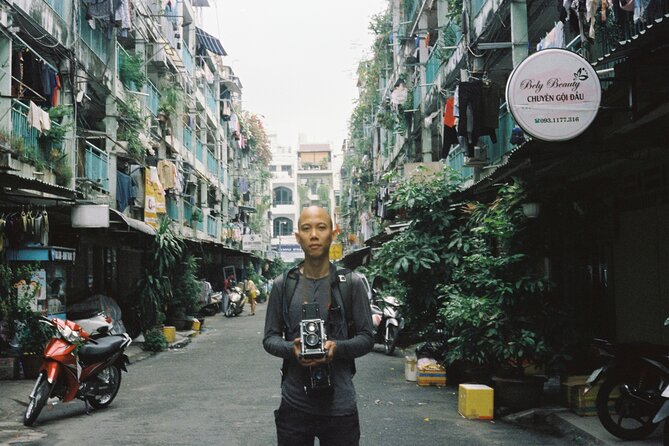
- A TLR analog camera plus one roll of B&W medium format film, so you think before you press the shutter
- Coffee and/or tea included, starting with a long-established coffee shop stop
- A private tour with only your group, guided by Bui Hoang Tu
- Alley street markets photography practice, where the framing matters more than the quantity
- Local translation support, designed to help you connect instead of just watch
Why medium-format film changes how you notice Ho Chi Minh City
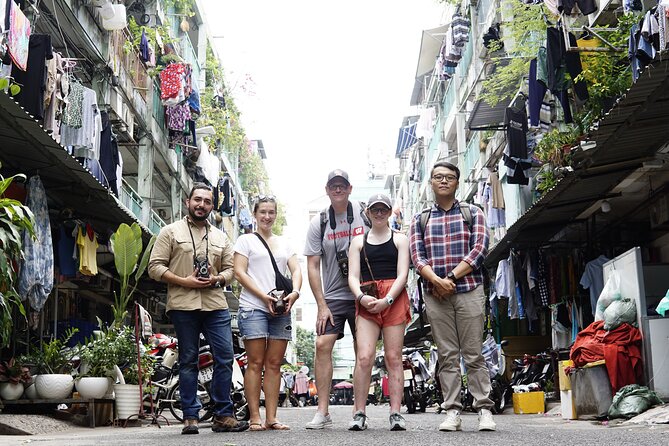
Ho Chi Minh City can be loud for your eyes. Cars, signs, steam rising from street stalls, people moving fast. This tour turns that speed down by putting you behind a real film camera, the kind that asks you to slow your body and your attention.
The biggest change is the constraint. You only get one roll. That single detail makes a difference in how you look. Instead of snapping ten similar photos and hoping one sticks, you start choosing. You look for light, you watch gestures, you wait a moment longer for the scene to line up. It is not just about nostalgia. It is about learning a more deliberate way to photograph street life.
Then there is the coffee element. Many photo walks focus only on images. Here, you build in sitting time at a recognizable older coffee shop vibe, which matters because Saigon street culture is social. People talk, sip, and pause. When you photograph right after you have experienced that rhythm, your photos tend to feel calmer and more human.
You can also read our reviews of more tours and experiences in Ho Chi Minh City.



Meeting Bui Hoang Tu and getting your camera setup right
Your tour starts at 73/8 Hồ Hảo Hớn, Phường Cô Giang, Quận 1. You meet your guide, Bui Hoang Tu, and you pick up the analog TLR camera plus one roll of B&W medium format film. Before you walk, you get a short brief on how to use the camera.
What I like about this approach is that it is practical. You are not sent out with gear and a shrug. You get enough instruction to start producing real results, and then you learn by doing, literally by winding and moving through nearby alleys and market streets. The guide also brings small talk about Saigon into the mix, which helps you relax before the first shots.
Another quiet but valuable feature is translation support. The plan is not only to show you where to stand. It is to help you break the ice with local people as you move through the area. In a place where street life is so active, having someone help you communicate makes the whole experience feel less like you are hovering and more like you belong for a moment.
Stop 1: a long-running coffee shop, tea or coffee, and a 1968 building view
The early anchor is coffee. You will spend about an hour at the first major stop, where you can sit down in one of the oldest coffee spots in the city. You get coffee and/or tea included, and the goal is simple: enjoy it like a local, not like a quick fuel stop.
This is a smart start for two reasons. First, coffee shops in Saigon are social hubs. They are places where you can observe everyday conversations, casual fashion, and the small rituals of people waiting for their drinks. Second, the seating time helps you reset your camera mindset. Before you run into alley streets, you get comfortable, you breathe, and you start looking.
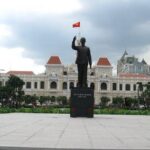
You also have a view component here, including the 1968 building of Ho Chi Minh City. Even if you do not focus a lot on architecture, seeing a historic landmark early gives your photos a stronger sense of place. It helps you connect modern street life to the city’s timeline, and it gives you an easy subject for your first few frames.
Practical note: this stop is designed for comfort, but you should still plan to keep an eye on your camera handling. Film is patient, not frantic.
Alley street markets photography practice with limited frames
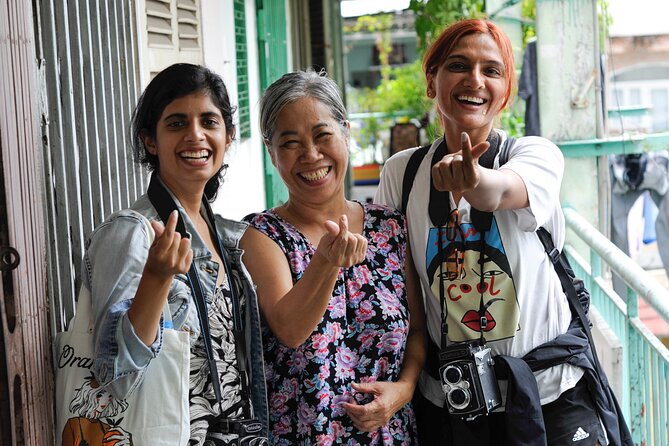
After coffee, the real photography work starts: you wind your way through alley street markets and practice using the camera in real scenes. This is where your guide’s instruction becomes more than theory. You learn through movement and decision-making.
Because you have just one roll, you begin to see street photography as selection, not collection. You might notice how people cluster around food, how shop signs frame faces, how scooters and foot traffic create layers. Instead of photographing everything, you focus on what tells the story best.
The route through alley markets is also where translation support pays off. When you can communicate, you are more likely to get genuine reactions and more natural moments. Even small interactions can change the mood of an image.
One practical consideration: this is not a fast, checklist-style walk. You will likely pause, reconsider, and reframe. That is the point. If you rush, you miss what the camera teaches you. If you slow down, the streets start to offer better compositions.
Finding an old apartment space by slowing down your walk
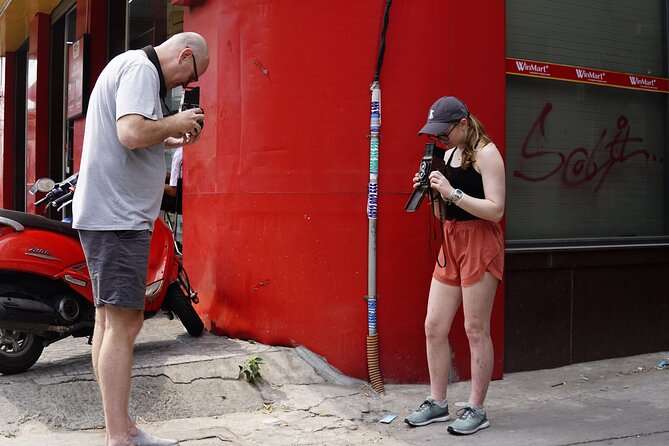
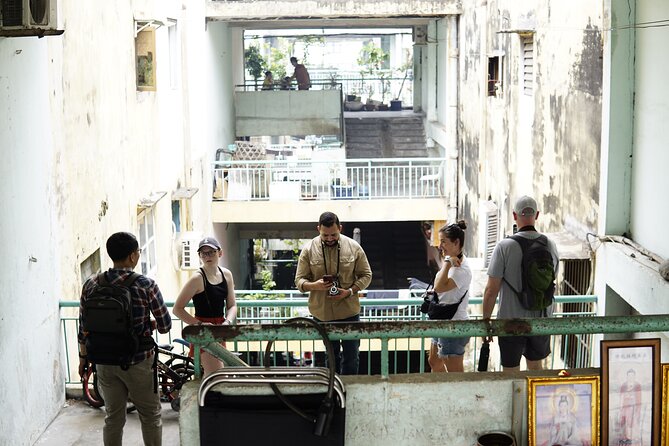
The experience also includes a stop to explore an old apartment, described as the oldest one hidden in town. The key idea is that you are not just looking at old buildings from a distance. You are being guided toward a place that rewards observation.
This matters because photo walks can become superficial, especially when you only photograph the obvious landmarks. An interior or residential-feeling space shifts your images. You begin to notice texture, everyday surfaces, and the way light moves near windows or passageways.
Also, an alley market plus an older apartment stop makes the day feel less staged. Your camera forces you to focus on details that digital zoom often ignores. And since you are shooting B&W medium format film, contrast and shadow become more important than color.
I would treat this part as your chance to slow down even more. You are probably past the initial excitement of shooting. Now you get to settle into the method: look, wait, choose, shoot.


Coffee, conversations, and why the local translation matters
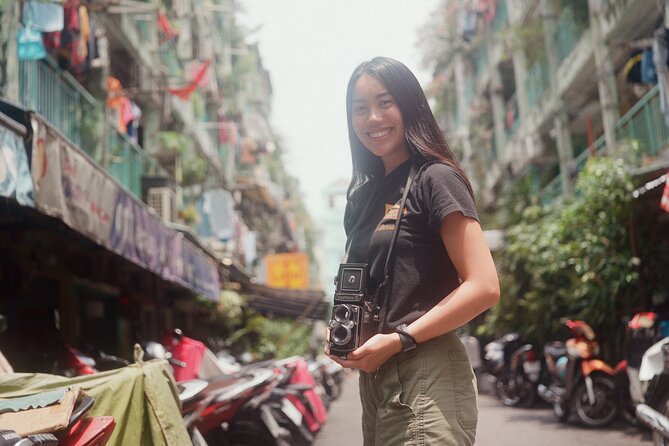
This experience is built around a simple formula: analog photography plus Saigon local touch. The local touch is not an add-on. It is the bridge that turns photo taking into real human contact.
Your guide helps you with translation, which is designed to break the ice. That means you are more likely to ask questions instead of just pointing a camera. You can also get a better sense of what you are seeing, because communication opens doors to context.
I love that this tour does not treat people as background. It treats them as part of the experience. Your photos will likely reflect that because you are not only searching for images. You are building a small relationship with the moment you are capturing.
And the coffee culture stop supports this. It gives you a natural setting where conversations feel normal. You are not interrupting a crowd to ask for attention. You are joining a daily ritual, then carrying that calm into the streets.
Price and value: what you are really paying for
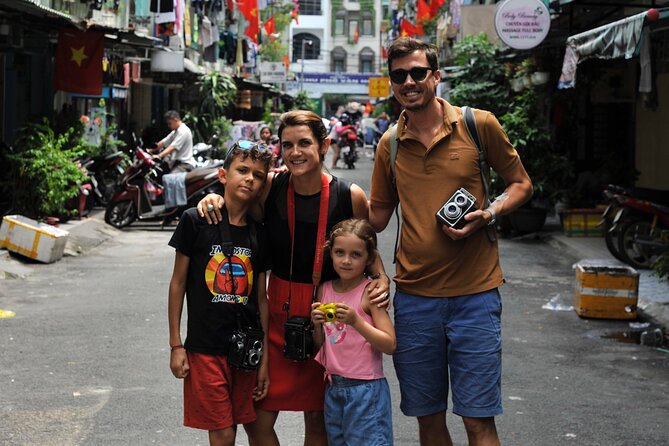
The price is $148.27 per person for about 3 to 4 hours. On the surface, that may sound like a lot for a short walking tour. The value comes from what is included.
You get:
- Coffee and/or tea
- An analog TLR camera
- One roll of B&W medium format film
You also get a private guide, Bui Hoang Tu, who provides not just instructions for the camera but translation support to help you connect. Private translation and a camera plus film are the two big cost drivers that most casual city walks do not include.
What is not included: private transportation. Since there is no transport provided, you’ll want to plan how you will reach the start point at 73/8 Hồ Hảo Hớn in District 1 and how you will end near Chợ Bàn Cờ in District 3. The meeting area is near public transportation, so it is usually manageable.
If you already own medium format gear and like shooting film, you might ask yourself why pay. The reason is the guidance and the structured chance to practice with a limited roll in the right local setting. This tour is about the learning experience, not just getting a camera.
Who this analog Saigon photo walk suits best
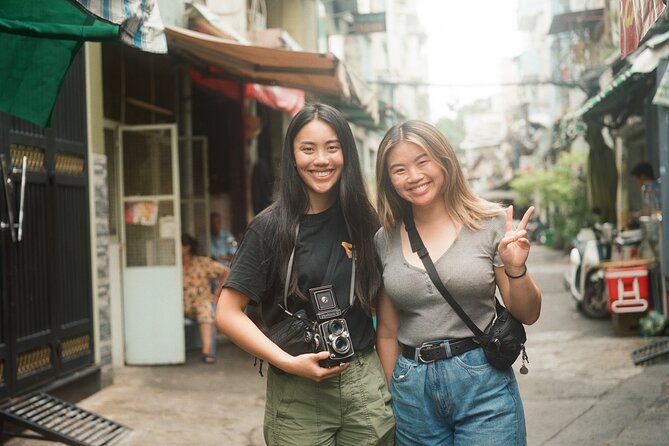
This works best if you like street life and you enjoy learning by doing. It is also a great match if you are tired of purely selfie-driven sightseeing and want something more grounded.
You will probably enjoy it if:
- You want a short, private experience with a guide who can help you talk to people
- You like film photography and want a hands-on day in the city
- You prefer fewer, better frames over endless shooting
- You want coffee culture built into your schedule
It may not fit if:
- You want a long, high-speed tour with many stops and lots of time in each place
- You dislike weather-dependent plans
- You hate the idea of having limited shots and taking time to choose
Tips to help your roll count and your photos improve
Here are the practical things that make your one-roll day go smoothly:
- Expect to slow down. The camera teaches you pacing, not speed.
- Shoot with intention early. Your first frames set your rhythm for the rest of the roll.
- Use the coffee stop to adjust your eyes. After you sit and watch, your street compositions often improve.
- Don’t be afraid of reframing. With film, you can’t fix everything later, but you can still choose what comes next.
- Wear comfortable shoes for alley walking. Even with short segments, market streets can be uneven.
- Bring patience for conversations. Translation helps, but human interactions take a moment.
Also, since the experience uses analog film, you should treat it like a small ceremony. Handle the camera calmly and keep track of what you shoot, because you will not have unlimited attempts.
Should you book this medium-format Saigon experience?
If you want Ho Chi Minh City with fewer crowds, more thought, and a strong sense of daily rhythm, I think you should book it. The camera setup plus coffee and tea, plus translation support, gives you a complete experience, not just a photo walk.
I would especially recommend it for first-time medium-format shooters or anyone who feels like they do not know what to photograph in Saigon. The one-roll constraint, combined with hands-on guidance from Bui Hoang Tu, makes you focus and learn fast.
If you are expecting a major transportation-heavy tour with constant sight-seeing, this is not that. It is short, concentrated, and weather-dependent. But if you show up ready to slow down, you will leave with a better way of seeing, not just a handful of images.
FAQ
What is included in the tour price
Coffee and/or tea, plus an analog camera and one roll of medium format B&W film.
Do I need to bring a camera or film
No. The analog camera and one roll of film are included.
How long is the experience
It runs about 3 to 4 hours.
How much does the experience cost
It costs $148.27 per person.
Where does the tour start and end
It starts at 73/8 Hồ Hảo Hớn, Phường Cô Giang, Quận 1, Ho Chi Minh City, and ends at Chợ Bàn Cờ, Phường 3, Quận 3, Ho Chi Minh City.
Is this a private tour
Yes. It is private, so only your group participates.
Is it suitable for most travelers
Most travelers can participate.
What happens if the weather is bad
The experience requires good weather. If it is canceled due to poor weather, you will be offered a different date or a full refund.
What is the cancellation policy
Free cancellation is available. You can cancel up to 24 hours in advance for a full refund. If you cancel less than 24 hours before the start time, the amount paid is not refunded.