Reviewed · SAIGON
Vietnam And Cambodia At Glance in 9 Days
Nothing beats two countries, one smooth plan. This trip lines up Mekong Delta mornings and Angkor Wat days with air connections, drivers, and key sights handled for you.
I especially like how the route moves from river life to temple mornings without feeling like you’re constantly starting over. You also get strong on-the-ground support from Realistic Asia, with past guests highlighting organizers like Rosie, Praveen, Lucy, and Dat by name. One thing to consider: it’s a busy 9 days, with flights and early starts, so you’ll want a flexible pace.
Key Things I’d Pay Attention To
- Ho Chi Minh arrival with a private driver (signboard pickup, direct transfer to your hotel)
- Mekong Delta structure that includes a cycle around Tan Thach village (not just a boat-and-back script)
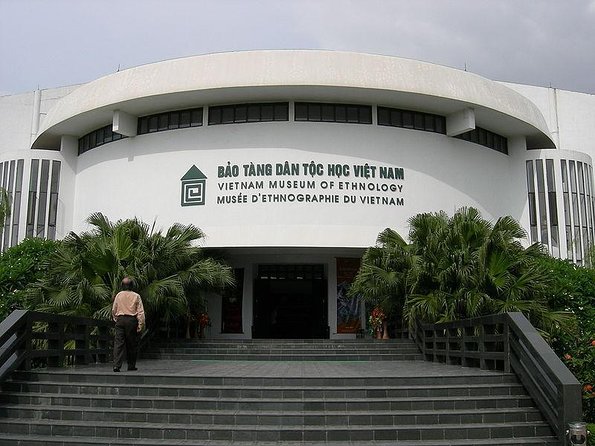
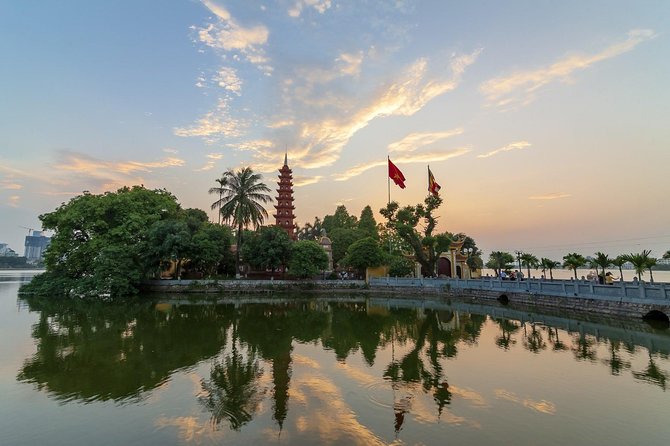
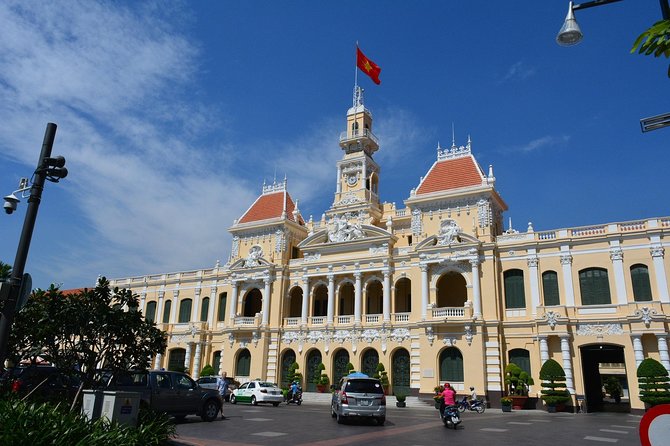
- Hanoi highlights in a packed day: Independence Palace, Tran Quoc pagoda, Ethnology Museum, and Temple of Literature
- Halong Bay with an early start for sunrise atmosphere, plus tai chi on deck
- Angkor Wat and Ta Prohm together so you see the big names and the jungle-stone drama in sequence
- Max group size of 15 which usually means less waiting and easier coordination
Two Countries, One Route That Makes Sense
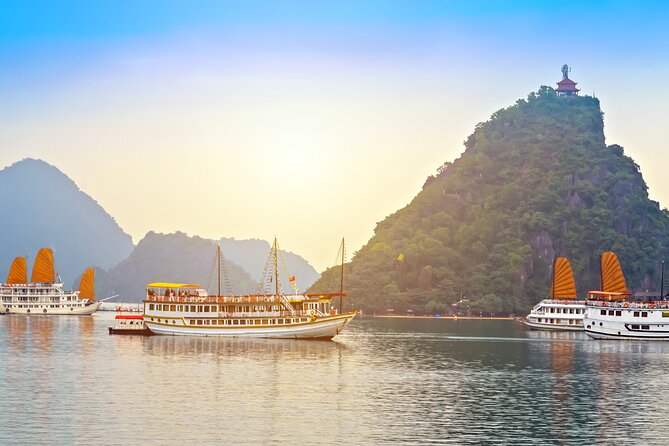
Vietnam and Cambodia can feel like two separate trips stitched together. This one works because it strings them by geography and time: you start in Ho Chi Minh City, work north to Hanoi, slide into Halong Bay by boat, then fly to Siem Reap for Angkor.
The value here is not just the headline sites. It’s the logistics handling. You get private transfers, guided sightseeing at the main stops, and internal flights listed with 20 kg luggage each. That matters because in Vietnam and Cambodia, time gets eaten up fast when you are figuring out transport on your own.
The pace is still brisk. Day-to-day you’re bouncing between cities, boats, and temples. If you like to wander slowly on your own with zero alarms, you might find the schedule a bit tight. But if you want a high-yield trip that covers a lot without constant planning stress, it’s a good match.
You can also read our reviews of more tours and experiences in Ho Chi Minh City.



Ho Chi Minh City Arrival, Then the River Gets Control of the Story
Your first day is the easy one by design. After landing at Tan Son Nhat International Airport, you’re met by a private driver holding a signboard with your name. That gets you to the hotel in the center of Ho Chi Minh City where you’ll overnight.
Why I like this approach: you can drop bags, reset after travel, and still have a bit of time to orient yourself. Ho Chi Minh City is high-energy, and if you have to hunt for transport the same day you arrive, it can start the trip on the wrong foot.
Also, the tour is built for convenience on the backend. The tour notes mobile ticket and group discounts, so you’re not chasing papers and you’re grouped into a manageable size. The maximum group size is 15 travelers, which usually helps keep pickups and timing from turning into a daily game of telephone.
Mekong Delta With My Tho and Tan Thach Village (Real Life, Not Just Postcards)
The Mekong Delta day is one of the best “feel the place” chunks of the whole route. You start early with breakfast, then meet your guide around 7:15 to 7:30 am and head to My Tho.
From there you get two key experiences that balance each other:
- A river-focused morning that sets the mood, then
- Tan Thach village, where lunch happens first, and then you cycle through the area to meet local villagers and see daily life.
This is the part that often separates a tour from a vacation. Boat rides are fine, but the minute you pedal through a village you start noticing the small stuff: how people move through their day, how life is organized along water and paths, and how quickly the landscape changes as you pass fields and homes.
One practical note. The schedule here is built around a morning departure. Wear shoes you can cycle in, and bring a light layer in case the morning is cooler or a bit breezy. The tour lists cycling time at about 3 hours, so you’ll want to feel comfortable in that window.
Day 3 in Motion: Independence Palace, Then Flying North to Hanoi
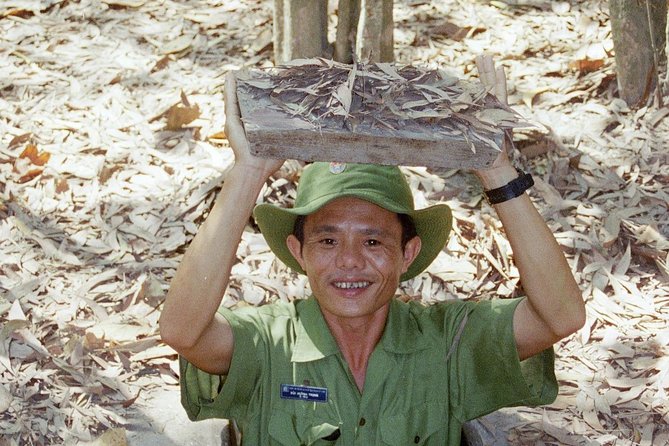
Ho Chi Minh City is not just a pit stop. You get a substantial sightseeing day that centers on the country’s modern history.
You visit Independence Palace, also called the Reunification Palace. This landmark is tied to major political change, and the building itself helps you understand the era. You then return to your accommodation, but the big shift comes after that.
Later, a driver takes you to the airport for your flight to Hanoi. On arrival, you meet a private driver again and get transferred to your hotel.
This is a good routing decision. Vietnam’s north-south distance makes same-day overland travel painful. By using flights between regions, you actually get to spend more time in the cities and less time stuck in transit.
The “consideration” angle: flying can be painless, but it compresses your day. If you hate airport time, this itinerary will feel like it has less wiggle room than, say, a slower land-only trip.
Hanoi Highlights Packed Like a Good Bento Box
Hanoi gets a big day, and it’s a smart mix of architecture, culture, and learning.
Your sightseeing block includes:
- Independence Palace earlier in the trip, then in Hanoi
- Tran Quoc pagoda on West Lake
- Vietnam Museum of Ethnology, where the tour notes it applies on Sun, Tue, Thu, and Sat
- Temple of Literature, described as the first university in Vietnam, built in 1073
You also get lunch at a local restaurant.
I like that this day covers different types of meaning. Tran Quoc gives you a calm, scenic pause by the lake. The Ethnology Museum is more about people and culture, not monuments. Temple of Literature brings you into the education and scholarship story that shaped Vietnam’s intellectual history.
Potential drawback, and it’s not the sites, it’s the rhythm. This day has multiple stops and admissions, plus driving. If you’re the kind of traveler who wants deep time in one place, you might wish you had a second day in Hanoi. But as an “at a glance” style itinerary, it does what it promises.
Tip from how this day is structured: plan to move with the group and don’t expect to linger endlessly. The tour includes timed segments, and staying with the flow helps you see the whole set without feeling rushed.
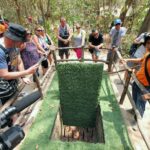


Halong Bay Cruise: Sunrise, Tai Chi, and Karst Scenery

Halong Bay is the visual payoff of your northward push. You check out in the morning, and the cruise team picks you up to travel to Halong Bay across the Red River Delta with rice paddies you can see along the way.
The tour’s first Halong Bay day includes a cruise experience on the water with limestone karsts. On the next morning, you wake early for dawn at the Wonder of the Nature World, with breakfast served in the dining room, and a tai chi class on the sun deck.
That sequence is exactly why people love Halong Bay. The limestone formations are dramatic any time of day, but sunrise adds mood. Even if you’re not a tai chi person, the main value is that early calm when the bay feels less busy and the scenery looks softer.
Admittedly, early mornings cost energy. If you’re traveling with tight sleep schedules, you’ll want to take naps when you can later in the trip. The tour notes you’ll be transferred back to Hanoi afterward and overnight there.
Fly to Siem Reap: Changing Landscapes Overnight
After your Halong Bay stop, you head back to Hanoi, then at the end of that stage you take your flight to Siem Reap. The itinerary includes private airport transfer on arrival.
This is a quick shift in atmosphere. Vietnam and Cambodia can feel like different worlds in terms of pacing and architecture, even when you’re only changing by flight. That’s part of the fun, but it also means you might want a little time to settle before temple time.
The tour handles your Siem Reap transfer so you can get to your accommodation and reset. The next day is where you go from getting settled to doing the big one.
Angkor Wat at the Right Time of Day (and Not Alone)
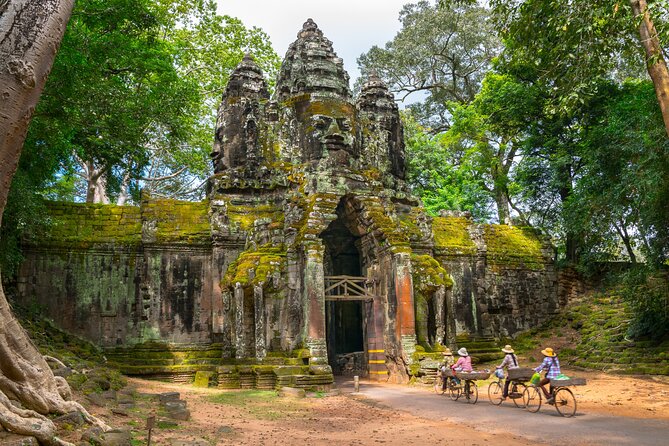
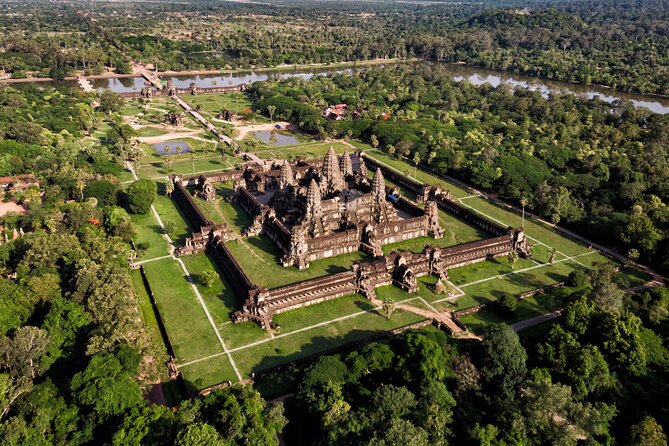
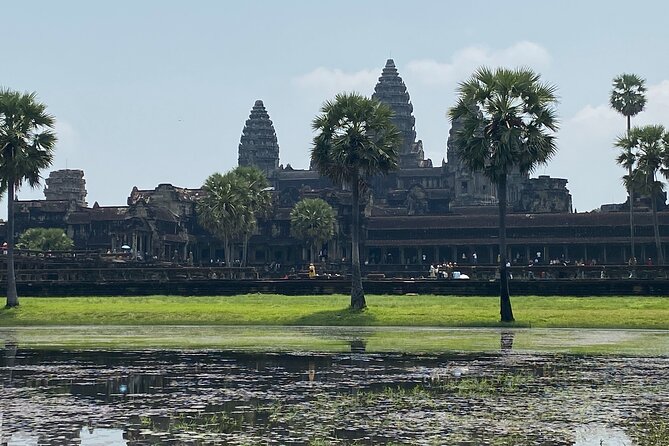
Your Angkor day starts with breakfast, then sightseeing in the Angkor complex. The plan begins with South Gate of Angkor Thom, famous for its carved details tied to the larger complex.
The itinerary then includes Angkor Wat time and moves on to Ta Prohm afterward. Admission tickets are marked as included for Angkor Wat and Ta Prohm.
Here’s why I think this pairing works. Angkor Wat is the “wow from far away” site. Ta Prohm is the “wow up close” one. The jungle overlay and the way trees and roots interact with the stone is the kind of scene that feels like it belongs to a movie set, except it’s real and you’re standing in it.
How to make the day work: bring water, wear comfortable shoes, and don’t try to see every stone chip as if you’re training for a museum job. The temples are huge. The win is seeing the standout spaces and letting the rest fill your memory without burnout.
Ta Prohm, Jungle Stones, and How to Pace Yourself
Your Ta Prohm stop is described as a jungle-covered temple with enormous fig trees and giant creepers that wrap around stone structures.
That description lines up with what makes Ta Prohm unforgettable. It feels less like a straight museum visit and more like walking through a living ruin. The stone isn’t just old, it’s being held and pushed by plants.
Time-wise, the tour lists around 6 hours for the Angkor area on that day. That’s long enough that you should expect some fatigue, especially if you are also coming off an early sunrise day in Halong.
So here’s my practical advice: if you want the best photos and the best experience, plan on breaks. Rest stops and shade matter in Siem Reap. If you have a headache-prone tendency, hydration is the simple fix.
Meals, Comfort, and What the Tour Actually Covers
This trip includes:
- Breakfast (8)
- Lunch (6)
- Dinner (listed as included, not just once)
Most of your sightseeing days are paired with some kind of meal stop. That’s valuable because in Vietnam and Cambodia, eating well and on time can be easier when you have a set rhythm. It also reduces the chance you lose time hunting for a place that fits your preferences.
Your transport is also handled with an air-conditioned vehicle, which matters in the hotter parts of the day and during longer drives.
Accommodation is shared: double, twin, or triple room, depending on your booking. That can be a good way to keep the price reasonable, but it’s not the kind of trip where you should expect private luxury.
Price and Value: Is $1,382 Worth It?
At $1,382 per person for 9 days, this isn’t a budget shoestring trip. It’s also not trying to be a high-end private driver-and-guide fantasy.
Where the value comes from:
- Domestic flights are included (Ho Chi Minh City to Hanoi, and Hanoi to Siem Reap) with 20 kg luggage each.
- You get private drivers for key transfers at both the start and the city transitions.
- Major sights are guided with a clear route across Vietnam and into Cambodia.
- The group size is capped at 15, which helps keep the experience feeling organized rather than chaotic.
Where you should stay realistic:
- Some admission tickets are marked as included, some are marked as free, and some activities are simply part of the day timing. That’s normal, but it means you can’t treat every hour as a fully ticketed, high-cost museum experience.
- Meals are covered, but beverages and personal spending are not.
My take: if you want a neat, guided “greatest hits” version of Vietnam and Cambodia with internal flights and transfers handled, this price looks fair. If you’re the kind of traveler who loves building everything from scratch, you could potentially DIY cheaper. But that’s exactly where time and stress usually sneak in.
Who This Tour Fits Best (and Who Should Consider Alternatives)
This works best for you if:
- You’re seeing both countries and want the highlights without spending days planning
- You like guided stops for the big historical anchors, then room to absorb the place
- You’d rather get help with airport transfers and city-to-city routing
- You can handle early mornings, especially with the Halong Bay dawn experience
It may not be ideal if:
- You want a slow travel style with lots of unscheduled free time
- You strongly dislike flying and airport days
- You want deep time in just one city like Hanoi or Siem Reap
The itinerary is intentionally balanced: river life, capital sights, a bay cruise, then temples. You get to sample many sides of the region without having to choose one country and sacrifice the other.
Final Thoughts: Should You Book This One?
I’d book this if you want Vietnam and Cambodia in one tidy package where the big moves are handled for you, and you’re happy to ride a schedule that moves.
The biggest strength is not one single landmark. It’s the combination of Mekong Delta village time, Hanoi’s major cultural stops, a Halong Bay dawn cruise with tai chi, and a Siem Reap temple day built around Angkor Wat and Ta Prohm.
If you are choosing between “see it all” and “take it slow,” this is clearly in the first camp. Just make sure you’re the type who can enjoy a busy itinerary without constantly checking the clock.
FAQ
How many days is the tour, approximately?
The tour runs for 9 days (approx.).
What city does the trip start in, and where is the meeting point?
It starts in Ho Chi Minh City, Vietnam, with the meeting point at Tan Son Nhat International Airport.
What time does the tour start?
The start time is listed as 8:00 am.
Which domestic flights are included?
Flights included are Ho Chi Minh to Hanoi and Hanoi to Siem Reap, each with 20 kg luggage per person.
What is the maximum group size?
The tour has a maximum of 15 travelers.
What meals are included in the price?
The tour includes 8 breakfasts, 6 lunches, and dinner.
Are admission tickets included for Angkor Wat and Ta Prohm?
Yes. Admission tickets are listed as included for Angkor Wat and Ta Prohm.
Is the Vietnam Museum of Ethnology always visited?
The tour notes that the museum applies on Sun, Tue, Thu, and Sat, so availability depends on your day.
Is an e-visa included?
No. E-visa is not included.
What happens if I cancel?
The experience is non-refundable and cannot be changed. If it is canceled due to poor weather, you’ll be offered a different date or a full refund. If it is canceled because the minimum number of travelers is not met, you’ll be offered a different experience or a full refund.