
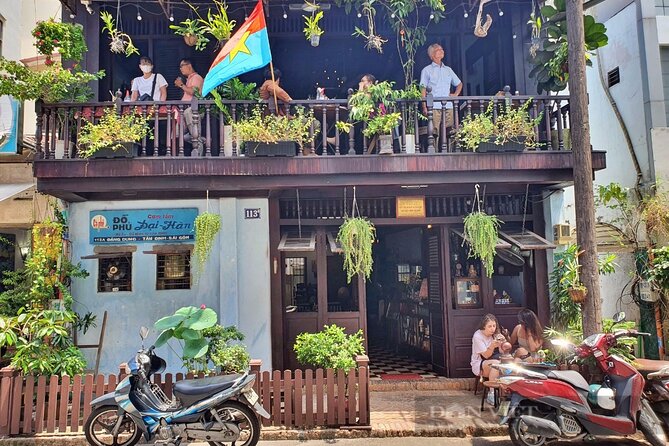
Reviewed · SAIGON MOTORBIKE & SCOOTER TOURS
Saigon City Sights & War Remnant Museum on Scooter
One of Saigon’s best tricks is speed on two wheels. This half-day scooter circuit pairs major spiritual sights with the War Remnants Museum, then finishes with a bowl of Bún Bò Huế that feels like real daily life. You also get hotel pickup plus a guide who explains what you’re seeing as you move through the city.
I especially love the mix: you get Jade Emperor Pagoda and the Thích Quảng Đức memorial, then you shift gears to markets and neighborhood streets before the museum pulls everything into sharper focus. I also like that the guides get singled out for safe riding and clear English, including examples like Vy, Kieran, Lian, Alex, Ethan, and Virgil.
The main thing to consider is that this includes heavy war content at the War Remnants Museum, and it’s done on a scooter. If you want a slow pace, long museum time, or you feel very nervous about riding, you might prefer a car or walking tour instead.
Key highlights worth planning around
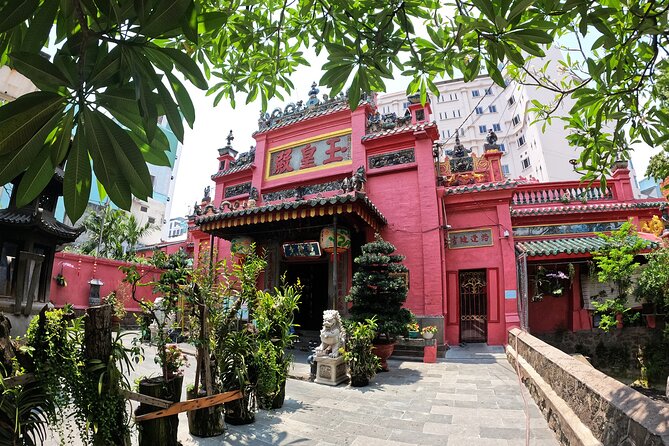
- Jade Emperor Pagoda with a free ticket: a classic stop that sets a spiritual tone before you hit the city’s more difficult memories.
- Thích Quảng Đức memorial: a short stop that carries major historical weight.
- Scooter route through everyday streets: Nguyen Thiện Thuật apartment blocks and District 10 market life put you close to how people actually go about their day.
- Chợ Lớn time for temples and street culture: a Chinatown-style neighborhood feel in District 5 and around the market area.
- War Remnants Museum included: you get the key exhibits without having to plan tickets on your own.
- Bún Bò Huế food finish: one meal and drink are included, and the tour has shown it can handle vegetarian needs.
Why a Saigon scooter tour makes sense
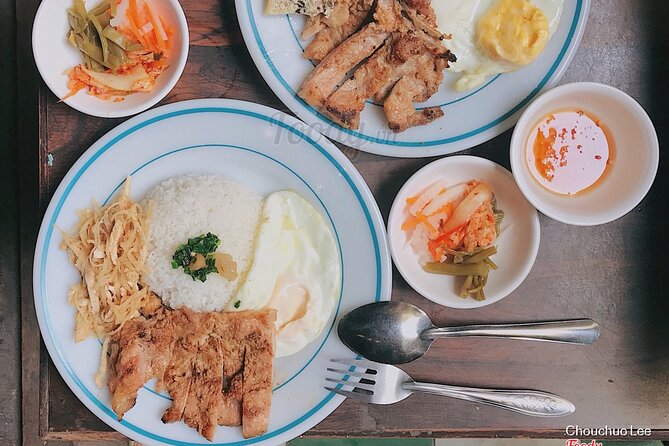
Ho Chi Minh City has a way of moving fast, even when you slow down. On a scooter tour, you feel that momentum without spending your day in traffic delays. It’s also a great format for first-timers, because you get a guided path through several very different parts of town in about four hours.
You’ll be on a scooter with an English-speaking tour guide and you’ll get a helmet and raincoat. That sounds practical because it is. The helmet is non-negotiable and the rain gear matters, since the tour notes it depends on good weather.
One subtle benefit: when you’re traveling this way, your “tour time” doesn’t feel like a sequence of stand-alone photos. Each stop becomes a context for the next one, from religious symbolism to daily commerce to war history.
You can also read our reviews of more city tours in Ho Chi Minh City



Chùa Ngọc Hoàng (Jade Emperor Pagoda), free and unforgettable in the details
Your first big spiritual stop is Chùa Ngọc Hoàng, also called the Jade Emperor Pagoda, in Binh Thanh District. It’s one of the city’s most recognized temples, and the free admission ticket makes it an easy way to start without spending mental energy on logistics.
What you should look for is how a temple works as both a place of worship and a public space. Even when you only stay about 30 minutes, the experience is enough to notice patterns: incense use, statue focus points, and the way people move through the shrine areas.
Practical tip: visit with your senses ready. If you’re sensitive to strong smells or crowds near entrances, just hang back for a few minutes until the flow clears, then move in.
The Thích Quảng Đức monument, where history turns personal
Next comes the Venerable Thích Quảng Đức Monument. The story is powerful: Thích Quảng Đức was a Buddhist monk known for his self-immolation in protest against religious persecution, and the monument commemorates that event.
This stop is shorter, around 20 minutes, but it’s the kind of moment where you don’t need lots of time to absorb what it means. The guide’s storytelling matters here. Without explanation, it can become just another statue. With context, it connects the politics of the era to lived belief and public resistance.
Consideration: if you prefer cheerful sightseeing only, this portion can feel heavy. If you’re okay with that, it’s also one of the most meaningful stops on the whole ride.
Nguyen Thiện Thuật apartment buildings, seeing Saigon beyond the postcard
After the memorial, you’ll head to Nguyen Thiện Thuật Apartment Buildings in District 3. This is a street area known for its lively mix of everyday activity, and it’s a great reminder that a city tour shouldn’t only show you monuments.
Here, the goal is to notice how housing and street life overlap. Apartment blocks are not just architecture. They’re where people schedule errands, meals, and daily routines, often within view of passing traffic.
Why this matters: seeing a neighborhood like this makes the later cultural stops feel less like separate attractions and more like parts of the same city.
Note: this stop is about 20 minutes, so you won’t have time for deep exploration. Use that time to orient yourself: where are the food options, what streets feel important, and what the flow of locals looks like.
Ho Thị Kỷ flower market, plus the street energy of trade
Ho Thị Kỷ Flower Market (Cho Hoa Ho Thi Ky) is in District 10 and one of the city’s large wholesale flower markets. You’re scheduled for about 30 minutes here, which is enough time to understand the scale and watch how flowers move through the day.
Even if you’re not a big “flower person,” markets like this tell you something key: Saigon runs on networks. The supply chains, the timing, and the buyers all shape how the city feels.
What I’d focus on: how vendors handle stacks, colors, and movement. You’ll likely see people working with purpose, not browsing for fun.
The tour overview also points to a stop for traditional medicine street of Hải Thượng Lãn Ông. If you’re the kind of traveler who likes to understand how health and culture intersect in daily life, that part can be especially memorable, because it’s about systems, not just items.
You can also read our reviews of more museum experiences in Ho Chi Minh City



Chùa Vạn Phật (Temple of Ten Thousand Buddhas): calm break between intensity
The itinerary includes Chùa Văn Phật, the Temple of Ten Thousand Buddhas, for about 20 minutes. It’s another Buddhist site, but the experience can feel different from the Jade Emperor Pagoda simply because of atmosphere. Expect a quieter shift where the city sound drops and your attention naturally moves toward the religious space.
This is a good palate cleanser after market energy and memorial weight. It also gives you a reset for the next stretch, when you’ll be heading toward Chợ Lớn.
Practical tip: if you’re taking photos, keep them respectful. Temples are active spaces for prayer, and a short pause to watch where people move can help you avoid blocking anyone’s route.
Chợ Lớn and Phố Tau Sài Gòn, food-adjacent culture in District 5
Your tour time moves into Chợ Lớn, with a stop that’s described around Phố Tau Sài Gòn in District 5. Chợ Lớn is known as a melting area of Chinese, Vietnamese, and other communities, and the neighborhood feel is created by narrow streets, temple points, and clan house styles in the wider market area.
You’ll also spend time at Chợ Lớn again, around 30 minutes, so this isn’t just a quick drive-by. It’s enough to notice how the street architecture and the religious buildings shape the area.
What to do with this time: keep an eye out for the contrast between the market and the temples. One side is about movement and commerce, the other about meaning and ritual. Together, they explain why Chợ Lớn feels like more than a single “attraction.”
War Remnants Museum, the part that asks you to sit with it
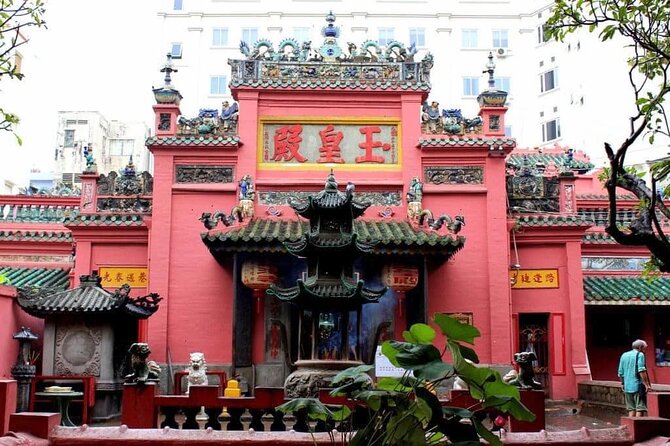
Then comes the centerpiece: the War Remnants Museum. This is where the tour focuses on evidence of crimes and consequences of the war of aggression against Vietnam, with exhibits that you’ll experience in about 30 minutes.
The museum is not a light stop, so don’t plan it when you’re tired. If you can, take a moment before you enter to decide what you want from it. Some people want to learn dates and events. Others want to understand impact. A guide helps you sort out what you’re seeing without turning it into an information overload.
The tour overview also notes underground tunnels and exhibits tied to the Vietnamese resistance movement. Even if your time is limited, that context can help the story connect to real places and real strategies, not just abstract claims.
Consideration: this section can be emotional. If you’re traveling with kids, bring a heads-up about tone, then decide together whether the museum is right for your group’s comfort level.
Bún Bò Huế and the street-food finish you’ll remember
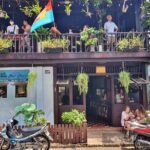
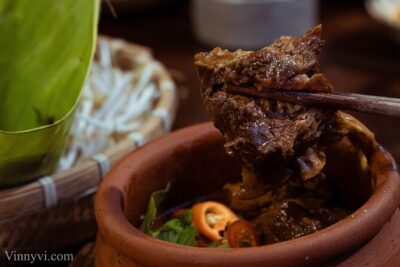
After temple time and museum time, the tour ends with an authentic bowl of Bún Bò Huế, Vietnamese beef noodle soup. The included meal and drink are part of a breakfast plus sightseeing and street-food structure, and the tour explicitly calls out Bún Bò Huế as the finish.
This is more than a reward. It’s your chance to connect history and spirituality back to daily life. When you eat something warm and familiar to the neighborhood routine, the city stops feeling like a set of stops and starts feeling like a place you could return to tomorrow.
A bonus from the strongest feedback: vegetarian visitors reported that the tour handled their needs well. That doesn’t mean every dish is automatically vegetarian everywhere, but it’s a strong sign you can ask ahead and get a workable plan.
Practical tip: if you have a sensitive stomach, eat slowly and sip water after each course-like portion. Market areas can be a bit intense, and you’re finishing after a full ride.
Scooter safety, first-time nerves, and what you actually get
Scooter riding is the heart of this tour. For some people it’s thrilling, for others it’s the one thing that makes them hesitate. The good news is that the tour includes a helmet and raincoat, plus a guide on hand to keep the route moving safely.
In the feedback, safe driving comes up again and again, including a story where a first-time rider was nervous but ended up saying the guide drove like a pro. Names that popped up in top comments include Vy, Kieran, and others. That matters because it tells you the company trains guides for real road conditions, not just calm side streets.
My advice before you go: wear closed-toe shoes, keep your hands relaxed around the handlebars, and do a quick check that your phone and small items are secure. Also, if it’s raining or you’re worried about slipping, the raincoat helps you stay steady and warm.
Price and value for a four-hour guided loop
At $22 per person, this is priced like a budget-friendly city tour but it includes a lot of “real trip costs.” You get:
- Hotel pickup and drop-off
- A scooter ride with an English-speaking guide
- Helmet and raincoat
- One meal plus a drink
- War Remnants Museum admission included
- Admission tickets listed as free for the other key stops
That combination matters. Many tours charge separately for transport, entrance fees, and meals. Here, most of that is rolled in, which makes it easier to compare value with other options.
One more value factor: it’s described as a private tour/activity, meaning only your group participates. That can improve how fast you can ask questions or adjust your pace at stops.
If your priority is maximizing what you see in a half-day without spending extra time booking tickets and negotiating transit, this price structure is a strong match.
Who should book this Saigon scooter tour, and who should skip it
This tour is a good fit if you want:
- A history-and-culture mix that includes spiritual sites, neighborhood streets, and Chợ Lớn.
- A food stop that feels tied to the city, not just an afterthought.
- A guide experience with strong English and safety focus, with names like Vy, Kieran, Lian, and Alex showing up in highly rated feedback.
- A group format that can work for families, since kids appear in the kind of comments that praise the guides.
You might skip it if:
- You’re not comfortable riding a scooter or you know you’ll be too tense to enjoy the ride.
- You want more time at the War Remnants Museum, since the schedule is tight and designed to cover several stops.
- You strongly prefer only light, cheerful attractions, since this includes memorial and war-related content.
Should you book this Saigon City Sights and War Remnants Museum on Scooter?
My take: book it if you’re comfortable on a scooter or you’re willing to try with a guide who’s praised for safe driving. You’ll get a smart mix of places that show Saigon in layers, from temple symbolism to market life to the War Remnants Museum. The Bún Bò Huế finish is also a genuinely good reason to choose this over a purely sightseeing-only tour.
If you’re scooter-shy, consider whether you’d enjoy a short, guided burst that includes emotionally serious material. For the right traveler, this is one of the most efficient ways to see Ho Chi Minh City beyond the obvious photo stops.
FAQ
How long is the Saigon City Sights and War Remnant Museum scooter tour?
The tour lasts about 4 hours.
How much does the tour cost?
The price is $22.00 per person.
Is hotel pickup and drop-off included?
Yes, hotel pickup and drop-off are included.
What entrance fees are included?
War Remnants Museum admission is included. Admission tickets for the listed other stops are listed as free.
Is food included?
Yes. The tour includes one meal and drink as part of the sightseeing and street-food experience, and the tour description calls out Bún Bò Huế.
Do I get anything to help with the scooter ride?
Yes, you’ll receive a scooter, an English-speaking tour guide, plus a helmet and raincoat.
More Museum Experiences in Ho Chi Minh City

More City Tours in Ho Chi Minh City



More Tour Reviews in Ho Chi Minh City


Not for you? Here's more nearby things to do in Ho Chi Minh City we have reviewed









Saigon Motorbike & Scooter Tours, compared.
 ★ 5.0Ho Chi Minh City Street Food Tour & Sightseeing By MotorbikeFrom $289,413 reviews
 ★ 5.0Saigon By Night and Street Food By Motorbike | Opt: Ao Dai RidersFrom $374,066 reviews
 ★ 5.0Private Street Food Tour by Motorbike/Car with Local StudentsFrom $453,950 reviews
 ★ 5.0Top Notch Street Food Motorbike Tour In Ho Chi Minh CityFrom $292,667 reviews
 ★ 5.0Private Street Food Motorbike Tour in Ho Chi Minh CityFrom $552,180 reviews
 ★ 5.0Ho Chi Minh City Motorbike Tour with Student | Saigon AdventureFrom $231,697 reviews
 ★ 5.0Afternoon Saigon Unseen Adventure by Scooter |Opt: Ao Dai RidersFrom $251,282 reviews
 ★ 5.0Ho Chi Minh Night Tour by Motorbikes with Female Rider | KissTourFrom $391,187 reviews
Browse the lists this tour appears in