
Reviewed · SAIGON COFFEE EXPERIENCES
Coffee Workshop in Ho Chi Minh City: Discover the art of coffee
Coffee has a science side. In Ho Chi Minh City, this hands-on class walks you from green beans to a brewed cup using Vietnam’s traditional phin filter. It’s also tied to the SCA’s Introduction to Coffee program, so you get a structured, skills-first format rather than just sampling.
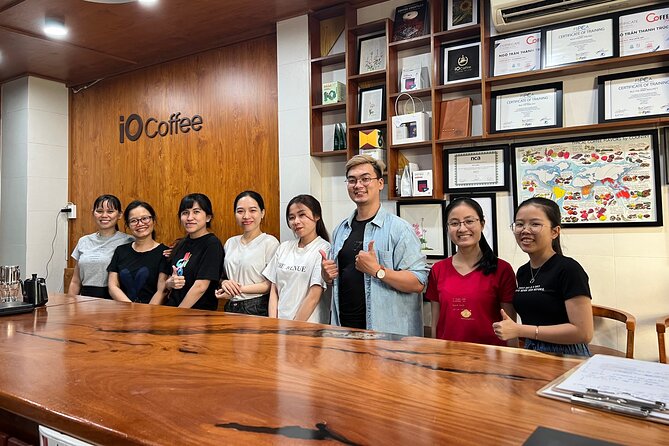
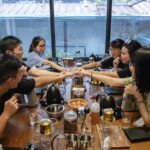
I really like two things. First, you practice every step that makes Vietnamese coffee work, including bean processing, roasting, and brewing. Second, the class stays small, with a maximum of 15 people, so you can ask questions while you’re actually doing the work.
One thing to consider: the tone can be technical. If you only want a casual cafe-style tasting, this may feel more technical and method-focused, and the level of English clarity can vary by instructor, so it helps to be comfortable with coffee vocabulary.
Key highlights I’d bet you’ll remember
- Max 15 participants for a more personal pace, not a crowded demo
- Hands-on roasting with three roast levels, then tasting the results
- Green bean selection after learning how to spot lower quality and defective beans
- Coffee processing demonstrations (three methods) using ripe coffee cherry material
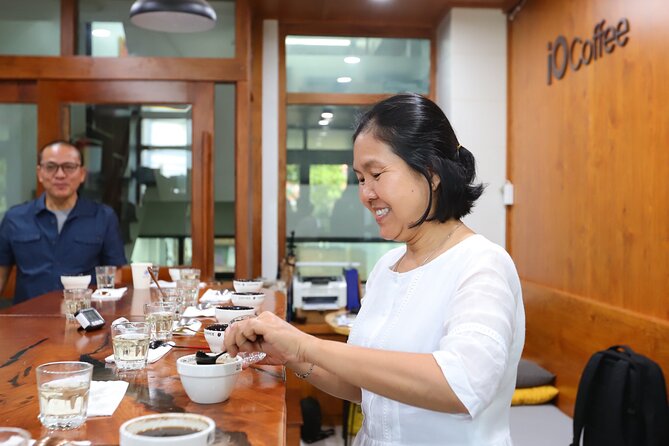
- Cupping sessions to compare flavors across roast levels
- Vietnamese Phin brewing practice to help you recreate the cup at home
Coffee in Ho Chi Minh City, from cherries to your cup
Ho Chi Minh City is one of those places where coffee is everywhere, but most people only experience it as a finished drink. This workshop is different because it treats coffee like a process. You see the raw material, you change it with heat, and then you taste what those choices do.
You also get a Vietnam-specific angle. The focus is on Vietnamese specialty coffee and fine Robusta, including how farmers harvest, process, and how you can tell the difference between lower and higher quality beans. Even if you already like coffee, the step-by-step flow makes it easier to understand what you’re actually tasting.
And because the course follows the SCA Introduction to Coffee approach, it feels organized. You are not just watching someone brew, you are learning how to assess coffee quality and how brewing technique affects the cup.
You can also read our reviews of more city tours in Ho Chi Minh City



Start point and small group setup that keeps things practical
The workshop begins at Signature M7, Lobby Block A, in Phú Mỹ Hưng, District 7. The activity ends back at the same meeting point, so you are not stuck figuring out a second location after your coffee lesson. For planning, count on about 2 hours total.
You’ll also get a mobile ticket, and confirmation comes at the time of booking. If you like things to feel straightforward, this one does: you show up, you get into the class rhythm, and you leave with brewing skills you can use later.
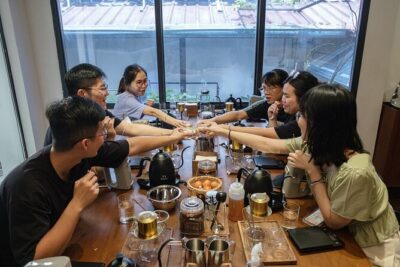
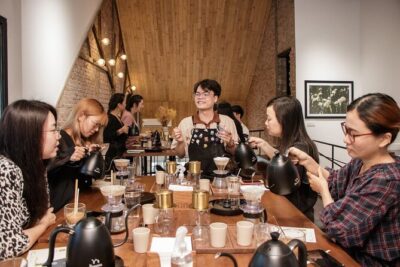
One practical detail that matters for a hands-on class: the group is capped at 15 travelers. That limit is not just marketing. In a workshop that includes bean handling, roasting, cupping, and brewing, smaller groups help you stay active instead of waiting in line for a turn.
Farming workshop: harvesting, processing methods, and bean sorting
The first segment is about how coffee goes from plant to something you can roast and brew. You learn the harvesting process and how coffee cherries are selected. This isn’t just theory. You get to handle the real material, which makes the “farm to cup” idea feel tangible.
You also spend time understanding the ripe coffee cherries. Learning the structure of the cherries helps you grasp why processing methods matter. The processing method influences flavor before the beans even reach a roaster.
Next comes the highlight for many people in this early stage: a demonstration of three different processing methods. You get a small-scale look at how each method changes the outcome. Then you test your senses and your judgment, because the course asks you to distinguish low-quality coffee and select green beans.
That selection part is practical and a little eye-opening. The workshop trains you to eliminate defective beans by hand. If you’ve ever wondered why some coffee tastes flat while others taste clear and more complex, this is where the answer starts.
Roasting session: hands-on heat, three roast levels, and your preference
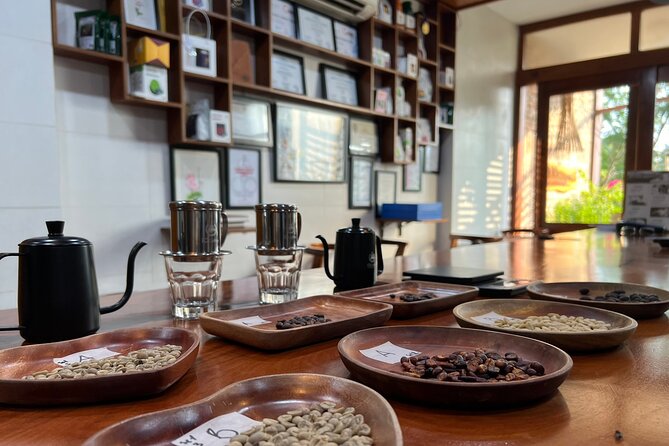
After the farm portion, the class shifts into roasting. This is hands-on, meaning you are not only told about roasting, you experience it. You work with hands-on coffee roasting and compare outcomes across three roasting levels.
What I like about this part is that roasting stops being abstract. Many coffee lovers hear words like light or medium, but they do not connect those labels to flavor results in a controlled way. Here, you taste what your roast choices lead to.
You also discover your preference. That sounds simple, but it helps you stop guessing. Instead of buying blindly at a cafe or shop, you can start thinking in terms of how roast level changes aroma and taste.
A note for people who love accuracy: this workshop leans technical. If you care about method details and repeatable results, the roasting practice fits your mindset.
Cupping: comparing flavors across roast levels without the guesswork
Next you move into tasting, using cupping as the bridge between what you did and what you learned. You explore coffee flavors through tasting, including different roast levels.
Cupping is a skill, and the course helps you build one. You learn how to pay attention to what changes when roast level changes, which makes your later brewing session more meaningful. If you just drank coffee on instinct, cupping teaches you to connect flavor impressions back to processing and roast.
Even if you do not call yourself a coffee nerd, this part is valuable. You leave with a better sense for how to describe what you taste, and that makes buying and brewing at home less random.
More Saigon tours, river trips, tunnel visits, and city experiences to compare

Brewing Vietnamese Phin coffee: the practical skill to take home
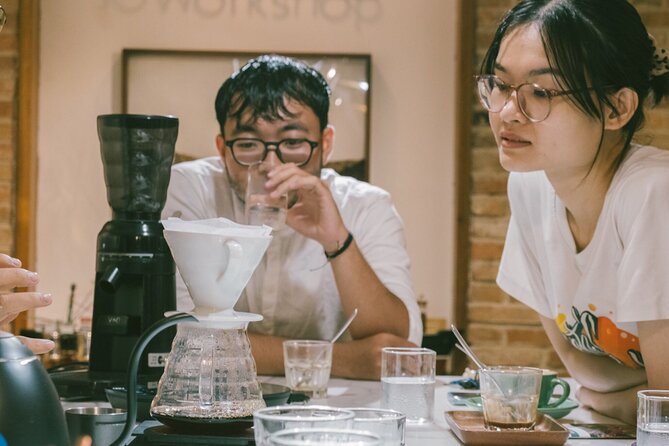
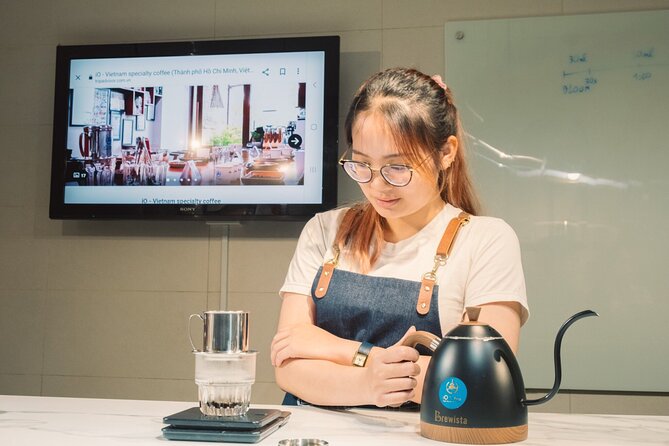
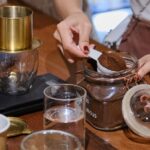
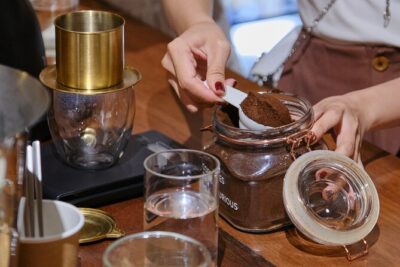
The final stage is about brewing. You get to learn the traditional Vietnamese Phin filter method, including the history of traditional Phin coffee. Then you brew an authentic cup yourself.
This part matters because so many coffee workshops end at tasting. Here, you go one step further. You learn to brew in a way that matches what you tasted earlier, using the Phin process. That means you can actually reproduce a similar cup at home.
The course also frames this in terms of flavor goals. You’re aiming to explore the natural, exquisite flavors of Vietnam’s fine Robusta. When brewing is part of the lesson, you are not just collecting facts, you’re learning how to apply them.
If you want a souvenir, this is a great one. Not a mug, not a bag label. Real method memory. You’ll know what to look for in your own brew, and you’ll understand why the same bean can taste different depending on how it’s prepared.
Price and value: is $71 fair for 2 hours of coffee practice?
At $71 for about 2 hours, this is not a cheap “hang out and sip coffee” activity. But for a class that includes multiple active components, it can feel fair.
Here’s what you’re paying for, based on what the workshop covers:
- you get instruction tied to an SCA Introduction to Coffee structure
- you handle coffee cherries and green beans
- you participate in roasting and compare three roast levels
- you do cupping and taste differences
- you brew with a Phin filter using fine Robusta
In other words, the price covers more than samples. It covers a full mini-lab, where you learn by doing. The cap of 15 participants also adds value, because you are more likely to get personal attention during hands-on moments.
If your priority is learning, not just drinking, you’re in the right price zone. If your priority is a quick, simple tasting with zero technical focus, you might feel like this is “too much lesson for one visit.”
Who this workshop suits best, and who should think twice
This workshop fits best if you like technique. The approach can be scientific and method-heavy. People who care about the technical sides of brewing tend to get more out of it than those looking for a casual stroll through coffee flavors.
I’d also say it suits anyone who wants to understand quality. The bean sorting, the difference between low and high quality, and the processing method comparisons help you stop treating coffee as a mystery.
It can be less ideal if you prefer light, easy storytelling. One person found the instructors’ English hard to follow, and another wanted more practical tips without the heavy technical angle. That doesn’t mean the workshop is poor. It just means language clarity and your own coffee interests will shape how much you enjoy the experience.
A pleasant upside is the small-group format. In some cases, the group can be tiny, which can turn the session into a more personalized question-and-answer style. You should not assume a one-on-one situation, but you can expect the class to avoid the chaotic feel of a large tour.
Practical tips so you get more out of the session
Come in expecting to handle coffee materials. That sounds obvious, but it helps you arrive mentally ready to get a little involved, especially during green bean sorting and roasting.
Bring a curious mindset about roast levels. If you pay attention to how the cupping results line up with what you did in roasting, the last step, Phin brewing, will click faster.
And plan your expectations around the class style. This is a workshop. It’s not just a cafe stop. If you want to leave knowing what to do at home, take notes on what you like after each roast level and then match those preferences when you brew.
Should you book this coffee workshop in Ho Chi Minh City?
If you want more than a coffee break, book it. This is a solid choice for learning the full pathway: harvesting, processing, roasting, cupping, and then brewing Vietnamese Phin coffee. The small cap at 15 people and the hands-on structure make the $71 feel more like an active lesson than a passive tasting.
Skip it or think twice if you only want a low-effort sampler and you dislike technical instruction. Also, if you’re sensitive to language clarity, remember that English understanding can vary by instructor, and coffee terms can add extra challenge.
Overall, I’d recommend it to anyone in Ho Chi Minh City who plans to drink Vietnamese coffee anyway. You’ll upgrade from enjoying the drink to understanding why it tastes the way it does.
FAQ
How long is the Coffee Workshop in Ho Chi Minh City?
It’s listed as about 2 hours.
How much does the workshop cost?
The price is $71.
Where is the meeting point?
The start point is Signature M7, Lobby Block A, in Phú Mỹ Hưng, District 7, Ho Chi Minh City, Vietnam. The activity ends back at the meeting point.
How many people are in the class?
The workshop has a maximum of 15 travelers.
What is included in the experience?
You learn about Vietnamese coffee from farm to cup, including green bean processing, roasting, tasting through cupping, and brewing traditional Vietnamese Phin coffee.
Will we get to taste coffee during the workshop?
Yes. There are tasting and cupping sessions, including tasting coffee with different roast levels.
What brewing equipment do we use?
You brew Vietnamese coffee using a traditional Phin filter.
Do I need to print anything?
No. The experience uses a mobile ticket.
When do I receive confirmation?
Confirmation is received at the time of booking.
What is the cancellation policy?
Free cancellation is allowed up to 24 hours in advance for a full refund. If you cancel less than 24 hours before the start time, the amount you paid is not refunded.
More Coffee Experiences in Ho Chi Minh City
More City Tours in Ho Chi Minh City



More Tour Reviews in Ho Chi Minh City

Not for you? Here's more nearby things to do in Ho Chi Minh City we have reviewed




Saigon Coffee Experiences, compared.
 ★ 5.0Fun & Easy Vietnamese Coffee Workshop in Hồ Chí Minh CityFrom $23293 reviews
 ★ 5.0Vietnamese Coffee & Culture Exploration in Hồ Chí Minh CityFrom $29202 reviews
 ★ 5.0Decadent Vietnamese “Egg Coffee” Workshop in Hồ Chí Minh CityFrom $20150 reviews
 ★ 5.01 hour Egg Coffee Cooking Class with Snack and Local InstructorFrom $1572 reviews
 ★ 5.0Saigon Unseen: Culture, Coffee, Hidden Spots Motorbike AdventureFrom $3360 reviews
 ★ 5.0Vietnam Flavour: Market-to-Table & The Art of Egg CoffeeFrom $4553 reviews
 ★ 5.0Early Riser Walk: Grandma Noodles, Cafe, Exotic Fruits & HistoryFrom $3933 reviews
 ★ 5.0Vietnam Coffee Journey – Make extraordinary tasty coffee yourselfFrom $3030 reviews
Browse the lists this tour appears in